How Can You Achieve a Natural Lip Corner Lift and Refine Your Lip Line Safely?
Why Do Lip Corner Fillers Often Look Unnatural, and How Can You Avoid It?
Many individuals seeking to correct drooping mouth corners or refine their lip line worry about ending up with an unnatural, artificial appearance. This concern is highly valid in aesthetic dermatology. The perioral area is one of the most anatomically complex regions of the face, constantly in motion due to speaking, eating, and expressing emotions. When filler is injected without considering the dynamic movement of the orbicularis oris muscle, it can create a static, stiff look that disconnects from natural facial expressions. To avoid these issues, clinical specialists focus on structural integration—placing precise amounts of high-cohesivity hyaluronic acid filler in specific anatomical layers to support the oral commissure without overloading the surrounding tissues.
Treatment timing: This procedure is ideal when mild-to-moderate oral commissure drooping begins to project a tired or sad expression, provided there is no active oral infection or severe perioral dermatitis.
Non-surgical care: Conservative approaches, such as targeted botulinum toxin injections to the depressor anguli oris muscle or myofunctional therapy, are highly reasonable for patients with mild dynamic drooping who do not yet require volume replacement.
Treatment selection: The optimal choice depends on the patient’s dynamic muscle movement, skin elasticity, and superficial vascular mapping, ensuring a balance between lifting capacity and tissue integration.
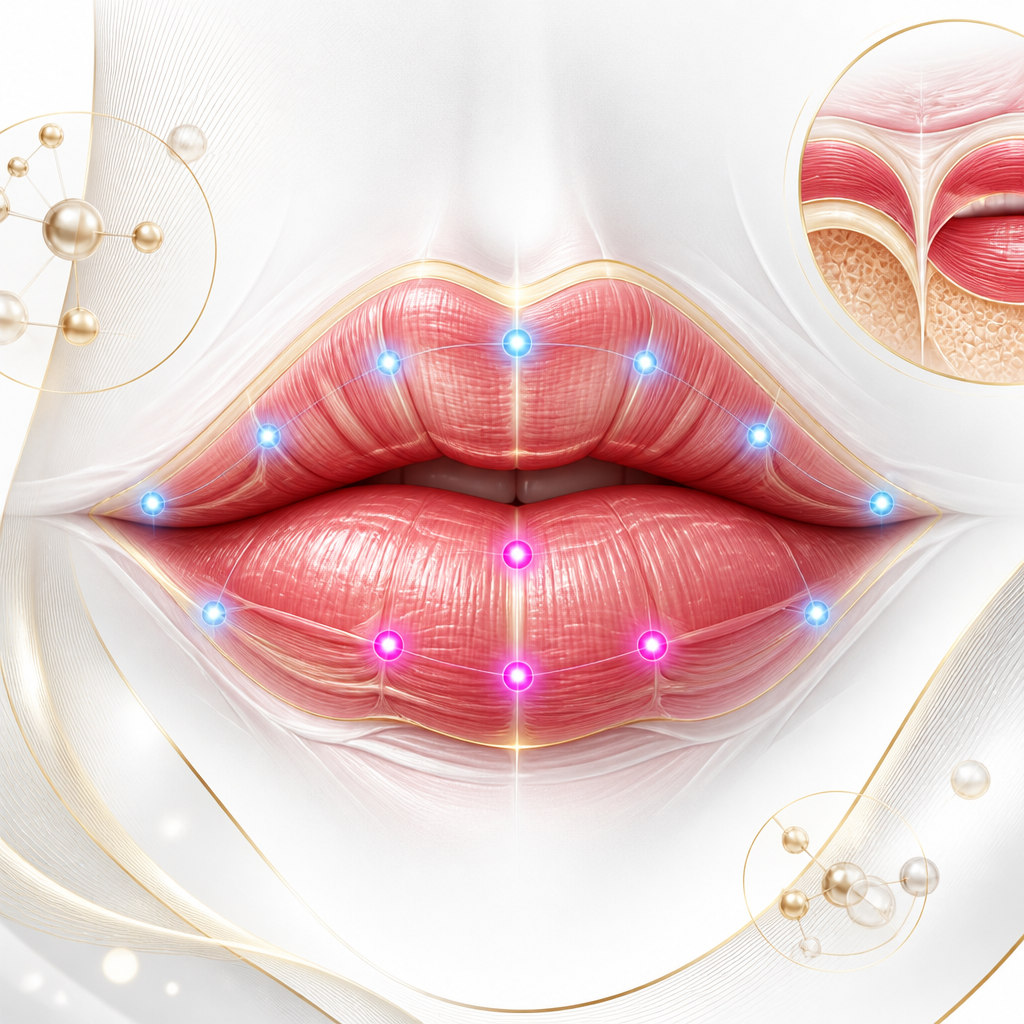
What Is the Anatomical Mechanism of Lip Drooping and Dynamic Line Refinement?
The human lip and mouth corner area are governed by a complex interplay of muscles, fat pads, and dermal structural support. Anatomically, lip corner sagging, or the downward turn of the oral commissure, is a progressive condition driven by both intrinsic aging and muscular activity. The orbicularis oris muscle, a sphincter muscle encircling the mouth, coordinates with the levator anguli oris and the depressor anguli oris (DAO). Over time, as dermal collagen degrades at an estimated rate of 1% annually after the age of 25, the superficial fat pads of the lower face descend, and the DAO muscle exerts a downward pull, resulting in visible melomental folds (marionette lines).
According to multiple observational studies and meta-analyses, including a landmark 2020 review in the Aesthetic Surgery Journal, successful correction of this region cannot rely solely on filling space. Instead, it requires mechanical support. Injecting a highly cohesive hyaluronic acid filler at the subcutaneous junction of the oral commissure acts as a physical strut, lifting the corner. Furthermore, because the superior and inferior labial arteries run in close proximity within the submucosal layer, precise anatomical depth is paramount. Practitioners must perform superficial subcutaneous or deep supraperiosteal injections to minimize the risk of vascular compromise or occlusion. For younger patients with early-stage dynamic changes, non-surgical alternatives like micro-focused ultrasound or radiofrequency microneedling can effectively tighten the dermal-epidermal junction, postponing the need for injectable fillers.
How Do Different Treatment Modalities Compare for Lip Line and Corner Correction?
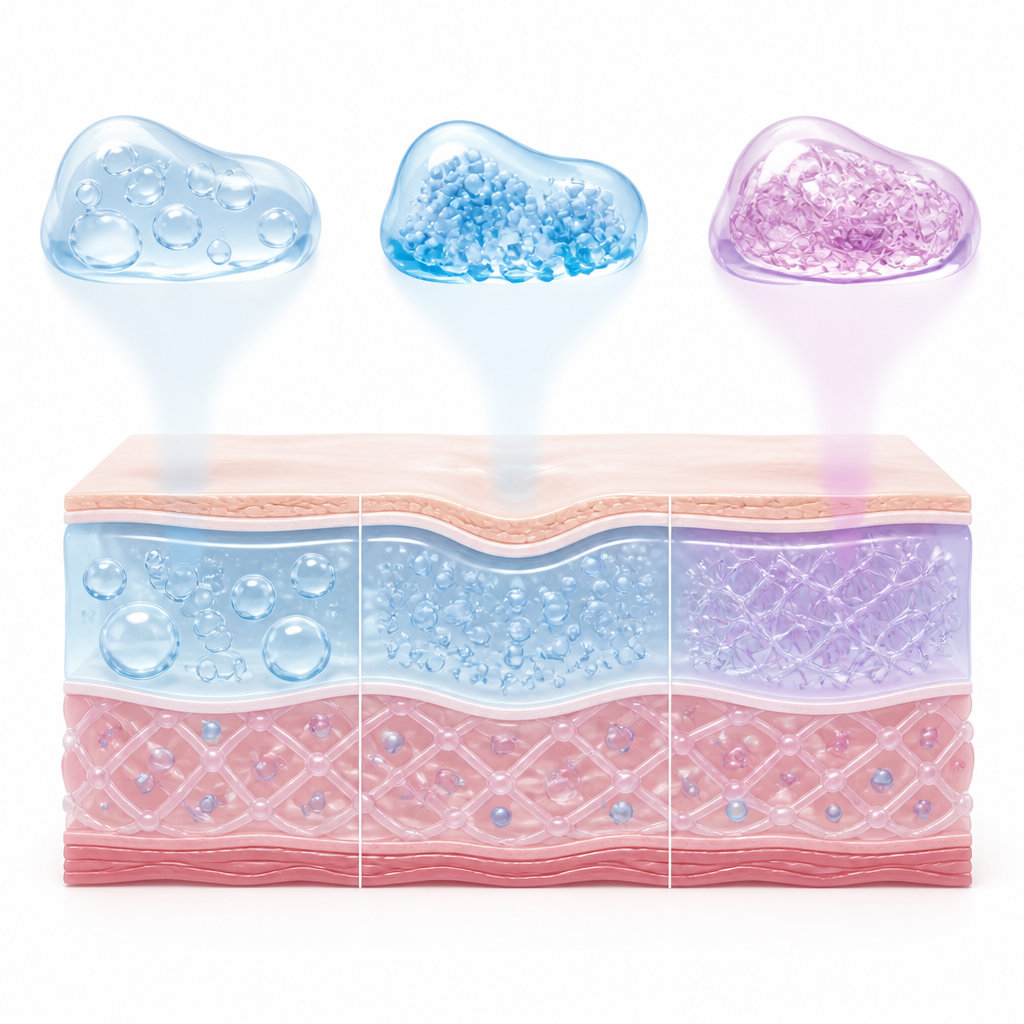
Choosing the right clinical approach requires evaluating the pros and cons of each product type. The table below outlines the distinct features, advantages, and limitations of common aesthetic interventions for perioral rejuvenation.
| Treatment Type | Primary Target & Mechanism | Key Advantage | Clinical Limitation |
|---|---|---|---|
| Cohesive HA Filler | Subcutaneous tissue of oral commissure; provides volume and structural support. | Immediate structural lifting and hydration of dry perioral lines. | Risk of minor migration if excessive volume is placed in highly dynamic zones. |
| DAO Botulinum Toxin | Depressor anguli oris muscle; reduces downward muscular pull. | Extremely natural movement; highly effective for dynamic sagging. | Does not restore lost volume or correct deep static folds. |
| Monofilament PDO Threads | Subdermal layer; stimulates localized collagen synthesis. | Long-term tissue tightening and physiological skin rejuvenation. | Mild temporary bruising and requires 4-6 weeks for full collagen production. |
According to official consensus guidelines published by the International Society of Aesthetic Plastic Surgery (ISAPS) in 2022, perioral rejuvenation yields the highest patient satisfaction when clinicians combine low-dose neuromodulators with soft, highly cohesive dermal fillers, rather than relying on high-volume filler monotherapy.
What Is the Step-by-Step Clinical Protocol for a Safe and Successful Procedure?
A successful lip corner lift is not merely about injection technique; it is a comprehensive process that begins with rigorous clinical evaluation. During the consultation at 청담큐비큐의원, the specialist analyzes the patient’s facial balance in both static and dynamic states. This ensures that the natural symmetry of the smile is preserved. To guide patients through this clinical journey, we utilize a structured decision-making workflow.
- Detailed Anatomical Mapping: Identifying the precise locations of the superficial labial arteries using tactile palpation.
- Dynamic Motion Analysis: Assessing how the lips move during speech and smiling to determine the perfect placement.
- Targeted Micro-Injections: Utilizing a retrograde linear threading technique with an ultra-thin cannula or needle to minimize tissue trauma.
- Post-Procedure Stabilization: Gentle molded massage to ensure seamless integration of the hyaluronic acid gel within the dermal layers.
- Follow-Up Evaluation: A clinical review at 14 days to monitor tissue adaptation and ensure optimal symmetry.
To help you understand the recommended clinical path, review the following decision-making model:
Step 1 (Assessment): Evaluate if the drooping is static (due to volume loss) or dynamic (due to overactive muscles).
Step 2 (Selection): If static, choose a highly cohesive HA filler. If dynamic, combine with a micro-dose of DAO botulinum toxin. If skin laxity is prominent, prioritize collagen-stimulating therapies.
Step 3 (Execution & Care): Administer the treatment using aseptic techniques and retrograde micro-injections, followed by strict adherence to post-procedure cooling and rest.
However, outcomes may differ in exceptional cases such as severe congenital facial asymmetry, underlying temporomandibular joint (TMJ) dysfunction affecting muscle balance, or previous surgical scarring in the perioral area.
Frequently Asked Questions FAQ
QHow long does the recovery take, and when will the results look natural?
Most patients experience mild swelling or minor bruising for 2 to 4 days post-procedure. Because the lips are highly vascularized, temporary swelling is completely normal. The filler fully integrates with the surrounding soft tissue within 1 to 2 weeks, at which point the final, natural-looking lift and smooth contour become fully evident.
QIs there a risk of the filler migrating or causing a lumpy texture?
Filler migration or lumpiness typically occurs when excessive volume is injected too superficially or if a filler with poor cohesive properties is used. By selecting a highly advanced, cohesive hyaluronic acid gel specifically formulated for dynamic facial zones and applying it in precise micro-amounts, the risk of migration is exceptionally low.
QWhat activities should be avoided immediately after the procedure?
To ensure proper positioning and healing of the filler, patients should avoid drinking through a straw, vigorous facial expressions, intense cardiovascular exercise, and exposure to extreme heat (such as saunas or hot baths) for at least 48 to 72 hours. This helps prevent early displacement of the gel and minimizes swelling.
This content is general medical information, and individual treatment decisions should be made through imaging tests and in-person medical evaluation.
Author: Medical content editor based on medical information research
Reviewed by: Specialist consultation from the relevant department
Last reviewed: 2026-07-23
Reference guideline: 2022 International Society of Aesthetic Plastic Surgery (ISAPS) Clinical Consensus
Medical neutrality and closing note
The core of medical decision-making is not to follow a specific device or a trending procedure, but to choose an option that fits each patient’s individual anatomy, condition, risk level, and treatment goals. Every procedure has both advantages and limitations, so decisions should be made after sufficient discussion with an experienced specialist.
[Medical information and copyright notice]
This content is a professional medical column prepared based on medical consultation from 청담큐비큐의원.
The infographics used in this article are created to support understanding and may differ from actual clinical results.
The information provided is a general medical guideline, and accurate diagnosis and treatment require an in-person evaluation by a qualified specialist.