Introduction
Non-surgical aesthetic enhancements have seen a significant rise in global demand, particularly among patients seeking to refine their facial profile without the downtime associated with invasive surgery. For many international patients, South Korea has become a primary destination for these advanced procedures, offering a blend of high-volume clinical experience and refined technique. Among the various options for nasal contouring, the use of specialized biodegradable sutures—often referred to in clinical settings as a nose thread lift—has emerged as a middle ground between temporary dermal fillers and permanent rhinoplasty. Patients exploring these options often prioritize safety, structural longevity, and the medical expertise of the facility, especially when traveling from abroad.
Line 1: Medically, a non-surgical nose thread lift is defined as a minimally invasive procedure utilizing bio-absorbable threads (PDO, PCL, or PLAA) to provide mechanical scaffolding and stimulate neocollagenesis within the nasal bridge and columella.
Line 2: Conditions under which non-surgical management is reasonable include minor dorsal humps, a drooping nasal tip, or a desire for bridge heightening where the patient seeks to avoid general anesthesia and a prolonged recovery period.
Line 3: Criteria to consider when choosing treatment include the anatomical thickness of the nasal skin, the underlying septal strength, and the specific material properties of the threads used to ensure structural stability.

The Medical Mechanism of Non-Surgical Nasal Contouring
The fundamental principle of this procedure involves the strategic insertion of barbed or molded threads into the subcutaneous layer of the nose. Unlike fillers, which add volume through a gel-like substance, these sutures provide a physical “pillar” that lifts the nasal tip or straightens the bridge. According to multiple peer-reviewed publications report that the primary material, Polydioxanone (PDO), has been used in cardiovascular surgery for decades, proving its biocompatibility and safety profile. When these threads are placed, they trigger a controlled healing response, leading to the formation of new collagen fibers around the thread material. This biological response ensures that even after the suture is absorbed by the body, some degree of the structural improvement remains.
Recent public health statistics show that the incidence of vascular complications is significantly lower in thread-based procedures compared to traditional filler injections in the nasal region. This is primarily because threads are inserted using blunt-tipped cannulas, which are less likely to penetrate blood vessels. However, in exceptional cases where the patient has undergone multiple previous rhinoplasties, the presence of internal scar tissue may alter the expected path of the cannula, requiring a more cautious approach by the medical professional. Specialized centers in the region often utilize Doppler ultrasound to map the nasal vasculature before the injection procedure to further enhance safety protocols.
Comparison of Nasal Enhancement Modalities
International medical society guidelines indicate that the selection of materials—ranging from PDO to the longer-lasting Polycaprolactone (PCL)—should be tailored to the patient’s skin thickness and desired duration of effect. While PDO threads typically resorbed within 6 to 9 months, PCL threads can maintain their structural integrity for up to 18 to 24 months. Choosing a medical institution that meets these criteria is crucial, as the tension and vector of the thread placement determine the final aesthetic outcome. International patients must also consider the “downtime-to-result” ratio when planning their visit to the medical institution.
| Comparison Factor | PDO Thread Lift | PCL Thread Lift | HA Dermal Filler |
|---|---|---|---|
| Primary Mechanism | Mechanical scaffolding | Long-term collagen support | Volumetric expansion |
| Structural Durability | 6–12 months | 18–24 months | 12–18 months |
| Vascular Risk | Minimal (Blunt cannula) | Minimal (Blunt cannula) | Moderate (Compression risk) |
| Common Limitation | Short duration | Limited regional availability | Potential migration (widening) |
However, in exceptional cases where a patient requires significant bone-level modification or substantial reduction of a large dorsal hump, non-surgical modalities may not provide the comprehensive results achievable through traditional rhinoplasty. Clinical data from the Korean medical community suggests that combining different thread types—such as the “Queen B” or other molded threads—can provide a more robust lift for the nasal tip compared to standard mono threads.
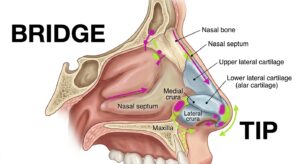
The Critical Importance of Septal Support and Skin Thickness
According to multiple observational studies and meta-analyses, the success of a non-surgical nose thread lift is heavily dependent on the patient’s pre-existing anatomy. The columella—the tissue between the nostrils—acts as the foundation for the threads that lift the tip. If the underlying septum is deviated or structurally weak, the threads may not have sufficient support to maintain the lift. Furthermore, the thickness of the nasal skin plays a role in how “natural” the results appear. Patients with very thin skin may be at a higher risk of thread visibility or extrusion if the threads are not placed at the correct depth within the subcutaneous fat layer.
For international patients, the facility should provide a comprehensive pre-treatment evaluation, often involving high-resolution photography or 3D imaging. This allows the specialist to measure the nasolabial angle and the nasofacial angle to ensure the proposed changes are harmoniously balanced with the rest of the facial features. In the context of medical tourism, the ability to coordinate this evaluation through telemedicine before traveling to the facility can significantly streamline the process. However, in exceptional cases where a patient has active skin infections or severe autoimmune conditions, the procedure should be delayed until the condition is fully managed.
Checklist: Choosing a Clinic for Nasal Contouring
- Does the clinic employ board-certified specialists with high case volumes in non-surgical rhinoplasty?
- Is there a clear protocol for international patients, including English-language support and post-procedure follow-up care?
- Are the thread materials used (e.g., PDO, PCL) FDA-approved or CE-marked for safety?
- Does the facility have emergency protocols and reversing agents available in case of rare complications?
- Is the medical institution transparent about the limitations of non-surgical methods compared to permanent surgery?
Decision-Making Mini-Flow:
1. If: You seek a subtle lift of the nasal tip or bridge with minimal downtime → Then: A nose thread lift is a medically viable option.
2. If: You have significant respiratory issues or major bone deformity → Then: Pursue a consultation for functional rhinoplasty with an ENT specialist.
3. If: You are traveling from abroad and can only stay for 3-5 days → Then: Ensure the clinic provides a clear post-return care plan for your home country.
However, in exceptional cases where a patient expects a “permanent” change from a single session, it is important to note that all bio-absorbable materials will eventually be metabolized by the body, requiring maintenance treatments to sustain the result.
Medical Tourism: Planning Your Recovery in Seoul
For those visiting a leading center in the region, the recovery timeline is relatively short. Most patients experience mild swelling or bruising at the entry point (usually the tip of the nose) for 3 to 7 days. International medical society guidelines indicate that patients can typically fly back to their home country 48 to 72 hours after the procedure, provided there are no immediate signs of inflammation. However, it is advised to avoid wearing heavy glasses or engaging in strenuous exercise for at least two weeks to prevent the displacement of the newly inserted threads. English-language medical support is a standard feature in major clinics within the Gangnam medical district, ensuring that international patients can communicate their concerns effectively during the follow-up period.

Frequently Asked Questions
Q: How long should I plan to stay in South Korea for this procedure?
A: While the injection procedure itself takes approximately 30 to 45 minutes, we recommend a total stay of 3 to 5 days. This allows for an initial consultation, the procedure, and a follow-up check to ensure the threads have settled correctly before your flight.
Q: Can a thread lift be combined with other nasal treatments?
A: According to multiple peer-reviewed publications report that combining threads with small amounts of botulinum toxin treatment can help relax the muscles that pull the nasal tip downward, enhancing the overall lift. However, combining it with fillers requires extreme caution and should only be performed by highly experienced specialists to avoid vascular compromise.
Q: What happens if I am not satisfied with the results?
A: Unlike hyaluronic acid fillers, which can be dissolved with hyaluronidase, threads cannot be “dissolved” instantly. They must either be surgically removed (which is complex) or left to naturally biodegrade over several months. Therefore, a conservative approach during the first treatment is often recommended.
Q: Is English-language consultation typically available at specialized clinics?
A: Yes, most high-end medical institutions catering to international patients provide dedicated coordinators who facilitate the entire process, from pre-travel video calls to post-care instructions in English.
This content represents general medical information, and individual treatment decisions should be made through imaging diagnostics and in-person consultation with a qualified medical professional.
Medical Neutrality and Closing Notes
The essence of this treatment lies not in following a specific device or trending technique, but in making the medical choice most suited to each patient’s individual anatomy and condition. Every procedure has both advantages and limitations, and thorough consultation with a qualified specialist is essential before any decision.
[Medical Information Disclosure and Copyright Notice]
• This content has been produced as a professional medical column based on the medical advisory of 청담큐비큐의원, a medical institution located in South Korea.
• Infographics used in this article were created with the assistance of AI technology for illustrative purposes and may differ from actual clinical outcomes.
• The information provided reflects general medical guidelines. For accurate diagnosis and treatment, please visit a qualified medical institution and consult directly with a specialist.
• For inquiries regarding English-language consultation, international patient services, or medical travel arrangements, please contact the medical institution directly.
Author: Medical Content Editor (Based on Medical Literature Research)
Medical Review: Specialist in Plastic Surgery/Dermatology
Last Reviewed: {TODAY_DATE}
Reference Guidelines: International Society of Aesthetic Plastic Surgery (ISAPS) 2023, PubMed-indexed research on PDO/PCL efficacy (2020–2024).
This content is provided for general medical information purposes, and individual diagnostic and treatment decisions should be made through consultation with qualified medical professionals.