Introduction
For many international patients exploring the medical landscape in South Korea, addressing periorbital aging—specifically under-eye hollowness—is a high priority. Medically known as the tear trough deformity, this depression can create shadows that result in a perpetually tired appearance, regardless of rest. While dermal fillers offer a non-surgical solution, the under-eye is one of the most anatomically complex of the face. Achieving a natural, safe outcome requires more than just a simple injection; it demands a deep understanding of vascular anatomy and the specific rheology of the products used. Patients traveling for specialized care must distinguish between routine aesthetic procedures and high-precision medical interventions.
1. Medically, under-eye hollowness is defined as the depression of the tear trough caused by the thinning of the overlying skin and the weakening of the orbital septum and associated ligaments.
2. Non-surgical management using hyaluronic acid fillers is medically reasonable when the hollowness is primarily due to volume loss rather than significant fat protrusion or severe skin laxity.
3. Choosing a treatment requires evaluating the clinician’s knowledge of the infraorbital vascular network, the product’s cohesive properties, and the long-term integration with the thin periorbital tissue.

The Pathophysiology of Periorbital Volume Loss
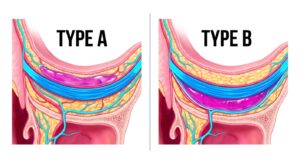
The skin in the infraorbital is the thinnest on the entire human body, often measuring less than 0.5mm in thickness. According to multiple peer-reviewed publications, this extreme thinness makes highly susceptible to the Tyndall effect—a phenomenon where the filler reflects blue light through the skin if placed too superficially. The tear trough deformity is not merely a skin issue; it involves the complex interaction of the orbicularis oculi muscle, the orbital septum, and the underlying maxillary bone. As we age, the retrusion of the facial skeleton and the descent of the malar fat pad exacerbate the hollowed appearance.
A fundamental principle in treating this is the “layered approach.” Clinicians must navigate the space between the skin and the periosteum (the bone’s surface) to avoid damaging the infraorbital artery and nerve. International medical society guidelines indicate that precise placement in the deep sub-orbicularis plane is essential for preventing visible lumps and ensuring the filler does not migrate over time. However, in exceptional cases where the patient has extremely high skin laxity or “festoons” (malar mounds), traditional filler treatments may lead to increased edema and should be approached with caution.
Comparing Non-Surgical and Surgical Periorbital Restoration
When international patients consult with specialized clinics, they often weigh the benefits of injectable treatments against more invasive surgical options. The choice depends heavily on the grade of the tear trough deformity and the patient’s available recovery timeline while abroad. While injections provide immediate results, surgery addresses structural issues that fillers cannot. According to multiple observational studies and meta-analyses, patients with significant orbital fat prolapse (eye bags) often achieve more stable outcomes through surgical repositioning rather than volume camouflage.
| Criteria | Hyaluronic Acid Filler | Surgical Fat Repositioning |
|---|---|---|
| Mechanism | Adding volume to the tear trough space | Redistributing existing periorbital fat |
| Downtime (Days) | 1 to 3 days (minor swelling) | 7 to 14 days (bruising/swelling) |
| Result Duration | 9 to 18 months (varies by product) | Semi-permanent (multi-year stability) |
| Ideal Candidate | Pure hollowness, thin skin, younger patients | Significant eye bags, older patients |
| Medical Limitation | Cannot correct significant skin sagging | Requires local/sedation anesthesia |
Recent public health statistics show that the demand for minimally invasive periorbital treatments has increased by over 30% among medical tourists due to the reduced recovery period. However, in exceptional cases where patients have a history of chronic periorbital edema or severe allergies to filler components, surgical alternatives or conservative topical management may be the safer clinical path.
Selection Criteria for International Patients
When seeking periorbital rejuvenation, patients should focus on three critical medical criteria to ensure safety and aesthetic harmony. First, the choice of the filler’s “rheology” is paramount. The under-eye requires a product with low G-prime (softness) and low water absorption to prevent the “overfilled” look that often occurs with more cohesive fillers. International medical society guidelines, such as those from the American Academy of Dermatology, emphasize that high-viscosity products can lead to visible ridges in the thin eyelid skin.
Second, the delivery method—needle vs. cannula—should be discussed. Many leading providers prefer using a micro-cannula, a blunt-tipped instrument that significantly reduces the risk of intravascular injection and minimizes bruising. Clinical data from Korean medical centers suggests that the use of 27G or 30G cannulas improves safety profiles in the infraorbital space by allowing the clinician to feel resistance from blood vessels rather than piercing them. Third, the ability to address complications is a hallmark of a high-end medical institution. Patients should verify that the facility maintains a protocol for using hyaluronidase (an enzyme that dissolves the filler) in case of an emergency or unsatisfactory result.
Recent data from the International Society of Aesthetic Plastic Surgery (ISAPS) indicates that the complication rate for under-eye fillers is significantly lower when performed by board-certified specialists who perform high volumes of these specific injections. However, in exceptional cases where the patient has a pre-existing autoimmune condition, the risk of delayed inflammatory nodules may be higher, necessitating a more thorough pre-treatment screening.
Considerations for Medical Travel to Korea
Traveling for aesthetic procedures involves logistical planning that goes beyond the treatment itself. For those visiting medical travel hubs, it is essential to consider the timing of their return flight. Changes in cabin pressure can sometimes exacerbate post-injection swelling. Most specialized centers recommend waiting at least 48 to 72 hours before flying to ensure any initial inflammatory response has stabilized. Furthermore, English-language medical support is vital for international patients to accurately convey their medical history and aesthetic goals during the consultation process.
Checklist: Preparing for Under-eye Rejuvenation
- Review the board certification and clinical experience of the treating specialist in periorbital anatomy.
- Confirm the specific brand and type of hyaluronic acid filler being used (low water absorption is preferred).
- Schedule your appointment at least 5 days before your departure to allow for follow-up if necessary.
- Discontinue blood-thinning supplements (e.g., Vitamin E, Omega-3, Aspirin) one week prior, after consulting with your primary physician.
- Inquire about the clinic’s post-treatment emergency protocol and the availability of English-speaking staff.
Medical Decision Mini-Flow:
– If: You have significant fat protrusion (bags) → Then: Consult for surgical repositioning rather than filler.
– If: You have thin skin and a deep “tear trough” groove → Then: Compare soft hyaluronic acid fillers with a layered cannula technique.
– If: You have active skin infections or severe chronic eye allergies → Then: Prioritize conservative medical management until the condition resolves.
However, in exceptional cases where patients have extremely deep-set eyes (enophthalmos), even the most advanced filler techniques may have limited efficacy in fully “erasing” the hollows, and expectations must be adjusted accordingly.
Frequently Asked Questions for International Patients
1. How long should I plan to stay in the country for this procedure?
Most clinicians recommend a stay of at least 3 to 4 days. This allows for the initial swelling to subside and for a follow-up check to ensure no vascular compromise has occurred before you board a long-haul flight.
2. Is English-language consultation typically available?
According to recent industry reports from the Korea Tourism Organization, many high-end facilities and Apgujeong districts provide dedicated international coordinators who offer seamless translation and logistical support throughout the medical journey.
3. Can I combine under-eye filler with other treatments like Botox or Lasers?
Multiple peer-reviewed publications report that combining modalities—such as using botulinum toxin for crow’s feet and fillers for hollowness—often leads to more comprehensive rejuvenation. However, it is generally advised to space out certain laser treatments to prevent heat from affecting the newly placed filler.
4. What follow-up care can I arrange after returning home?
High-end centers often provide digital follow-up services via video call or secure messaging. It is also recommended to have the name and contact details of a local specialist in your home country who is familiar with managing injectable complications as a safety precaution.

This content represents general medical information, and individual treatment decisions should be made through imaging diagnostics and in-person consultation with a qualified medical professional.
This content is provided for general medical information purposes, and individual diagnostic and treatment decisions should be made through consultation with qualified medical professionals.
Medical Review: Specialist in Dermatology / Plastic Surgery
Last Reviewed: {TODAY_DATE}
Reference Guidelines: ISAPS Global Statistics (2023), American Academy of Dermatology Periorbital Guidelines (2022)
Medical Neutrality and Closing Notes
The essence of this treatment lies not in following a specific device or trending technique, but in making the medical choice most suited to each patient’s individual anatomy and condition. Every procedure has both advantages and limitations, and thorough consultation with a qualified specialist is essential before any decision.
[Medical Information Disclosure and Copyright Notice]
• This content has been produced as a professional medical column based on the medical advisory of 청담큐비큐의원, a medical institution located in South Korea.
• Infographics used in this article were created with the assistance of AI technology for illustrative purposes and may differ from actual clinical outcomes.
• The information provided reflects general medical guidelines. For accurate diagnosis and treatment, please visit a qualified medical institution and consult directly with a specialist.
• For inquiries regarding English-language consultation, international patient services, or medical travel arrangements, please contact the medical institution directly.