How Can You Safely Choose Body Contour Injections for Effective Body Care at an Apgujeong-dong Dermatology Clinic?
Why Do Patients Seeking Body Contour Care in Apgujeong-dong Face Difficulties in Selecting the Right Treatment?
For many individuals pursuing refined physical proportions, stubborn localized subcutaneous fat deposits present a significant challenge. Despite strict adherence to dietary restrictions and regular physical exercise, certain adipose tissue pockets—such as those in the lower abdomen, flanks, upper arms, and inner thighs—remain highly resistant to systemic metabolic changes. When visiting a dermatology clinic in Apgujeong-dong for body care, patients are often overwhelmed by the sheer variety of non-invasive lipolytic procedures available. The primary clinical challenge lies in distinguishing between generalized weight management and targeted contouring. Without a proper understanding of individual anatomical fat distribution and microcirculation capacity, undergoing arbitrary treatments can lead to suboptimal aesthetic outcomes or localized tissue irregularities.
Treatment timing: Initiated when localized subcutaneous fat deposits persist despite at least 3 to 6 months of structured lifestyle modifications and metabolic stabilization.
Non-surgical care: Conservative management—including hydration, compression therapy, and targeted lymphatic drainage—is ideal for mild fat accumulation or as a maintenance protocol.
Treatment selection: Clinical decisions must be guided by precise anatomical fat depth measurements, localized skin laxity, and the patient’s individual history of microvascular circulation.
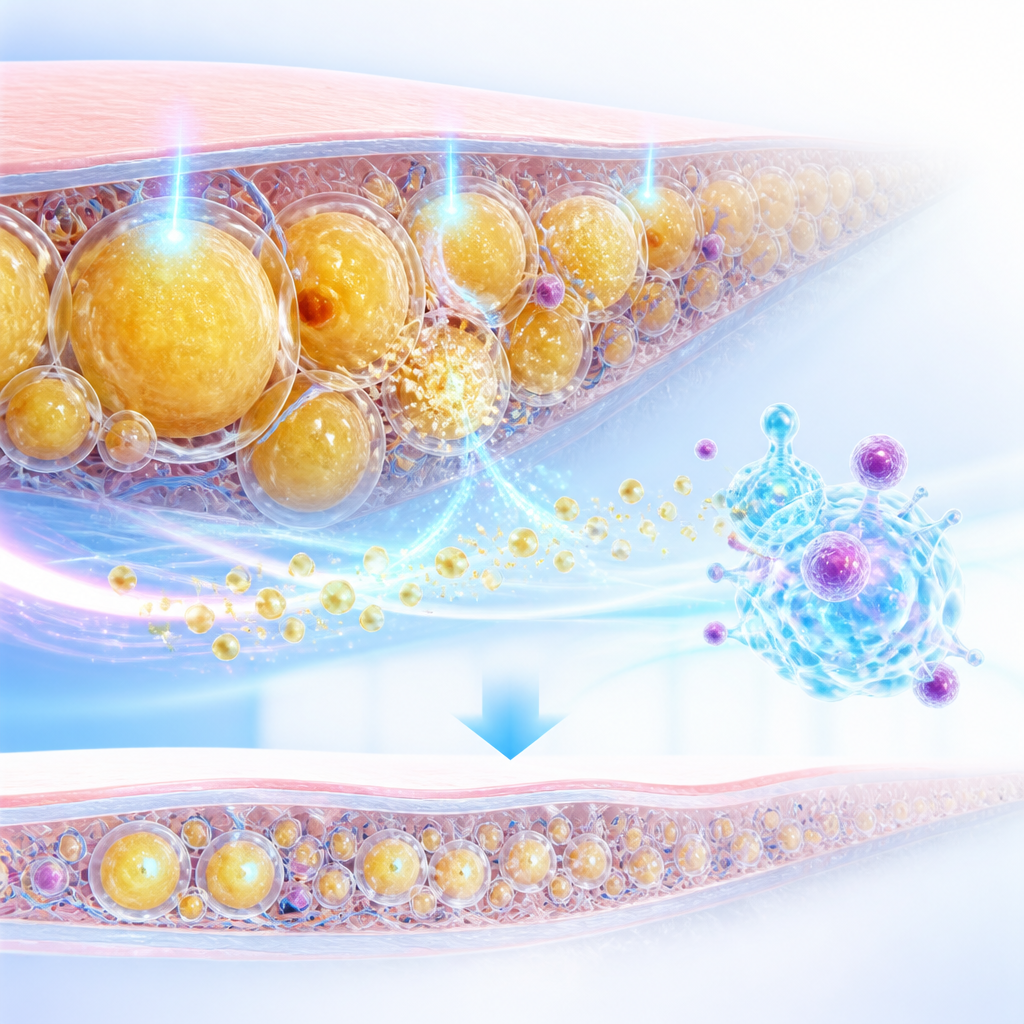
What Are the Pathophysiological Mechanisms of Lipolytic Body Contour Injections?
From a physiological perspective, body contour injections target localized adipose tissue by utilizing active pharmacological agents to induce the chemical breakdown of subcutaneous adipocytes. Adipocytes are specialized cells that store energy as lipids; when hypertrophied, they create visible bulges beneath the dermal layers. Through the process of targeted lipolysis, the cellular membranes of these fat cells are disrupted or their metabolic pathways are stimulated to release stored triglycerides into the interstitial space. Once released, these lipids must be cleared from the tissue through the lymphatic system and microcirculation pathways. This is a progressive, biologically demanding process that cannot be rushed. Non-surgical conservative alternatives, such as compression garments, manual lymphatic drainage, and therapeutic exercise, should always be considered first. These conservative methods are highly reasonable and effective for patients who present with minimal localized fat (less than 1.5 cm in thickness) and excellent baseline tissue elasticity.
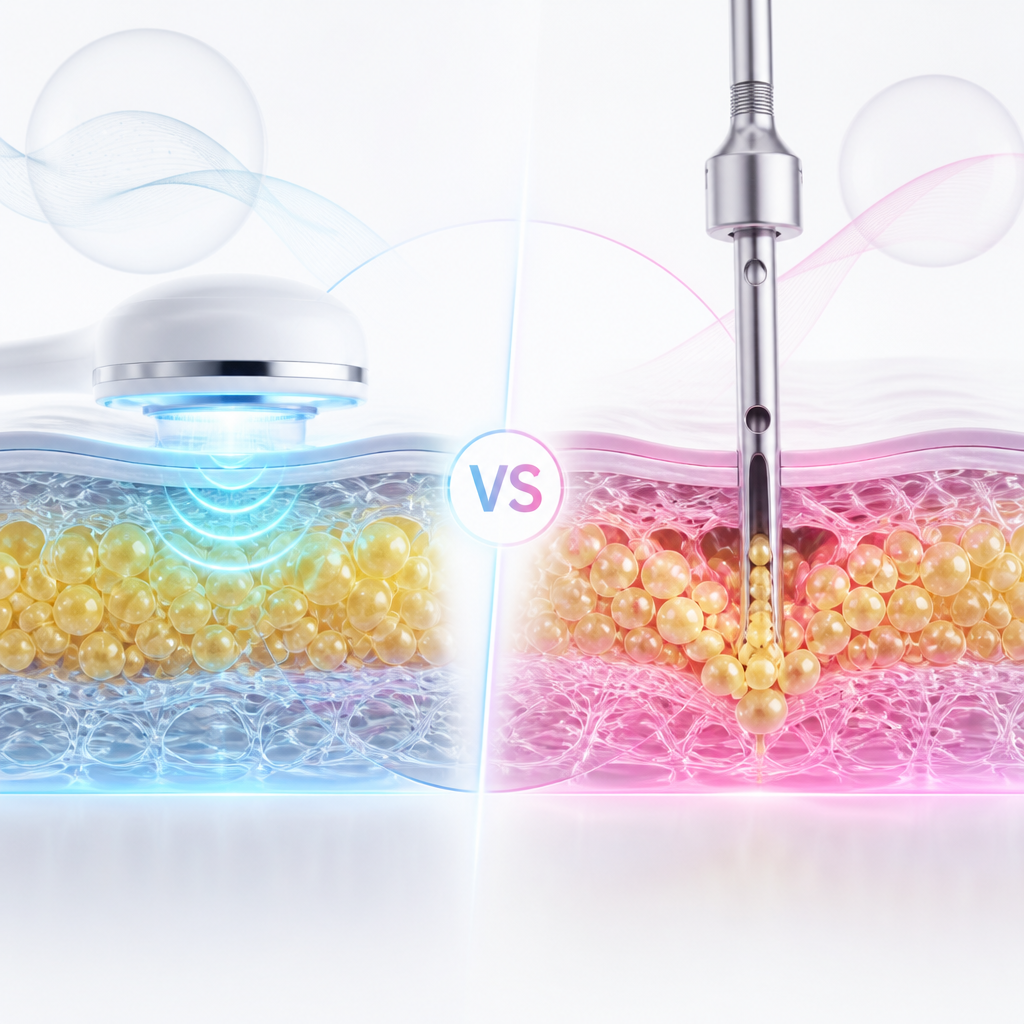
To help patients understand their options, the following comparative table outlines the clinical differences between non-invasive lipolytic injections and surgical fat removal options:
| Clinical Parameters | Body Contour Injections | Surgical Liposuction |
|---|---|---|
| Primary Mechanism | Chemical lipolysis and natural lymphatic clearance of lipids | Mechanical aspiration and physical destruction of fat tissue |
| Primary Benefit | Non-surgical, minimal downtime (1–2 days), and gradual skin adaptation | Significant single-session volume reduction of deep fat layers |
| Primary Limitation | Requires multiple sessions (typically 3–5) for noticeable contour refinement | Inherent surgical risks, prolonged recovery, and potential tissue contour irregularities |
| Downtime & Recovery | Immediate return to daily activities; mild swelling subsides in 24–48 hours | 2 to 4 weeks of restricted movement; requires specialized compression garments |
According to clinical consensus guidelines published in the Journal of Cosmetic Dermatology (2021), combining localized subcutaneous injections with targeted mechanical stimulation or lymphatic drainage significantly enhances lipid clearance and reduces the risk of localized swelling.
How Should You Determine If You Are an Ideal Candidate for Body Contour Injections?
Determining the suitability of medical body care requires careful objective mapping of your tissue structure. Candidates seeking premium body contouring solutions in Apgujeong-dong should review the following clinical checklist to assess their readiness for treatment:
- Presence of stubborn, localized fat deposits (e.g., lower abdomen, flanks, or thighs) that have not responded to a consistent 12-week regimen of balanced diet and exercise.
- Adequate skin elasticity to ensure that the overlying dermis can retract smoothly as the underlying fat volume decreases.
- A functional lymphatic system, with no history of severe lymphedema or vascular insufficiency in the targeted anatomical region.
- Realistic expectations regarding progressive, natural-looking volume reduction over a multi-session clinical protocol.
- No active inflammatory skin conditions or infections in the localized area designated for injection.
To guide your initial therapeutic decision-making, follow this standard clinical decision flow:
- Evaluate Lifestyle Base (IF): If localized fat pockets persist after 12 to 24 weeks of active nutritional modification and regular physical activity…
- Undergo Diagnostic Mapping (THEN): Then undergo a detailed diagnostic evaluation at a specialized dermatology clinic to measure subcutaneous fat thickness via medical ultrasound.
- Formulate Clinical Plan (RESULT): If the fat layer is within the moderate range (1.5 cm to 3.5 cm) with healthy dermal elasticity, then proceed with a customized lipolytic injection regimen paired with microcirculation-enhancing post-care.
According to multiple observational studies and meta-analyses published in the Aesthetic Surgery Journal (2022), patients undergoing structured, non-invasive lipolytic protocols experienced an average localized circumference reduction of 1.8 to 2.6 centimeters over a 12-week course when paired with proper hydration and basic lymphatic stimulation. However, outcomes may differ in exceptional cases such as patients with severe tissue laxity, advanced metabolic syndrome, or fibrotic adipose tissue where cellular breakdown is mechanically restricted by dense collagen bands.
Frequently Asked Questions FAQ
QHow many sessions of body contour injections are typically required for noticeable results?
According to clinical protocols, most patients require 3 to 5 sessions spaced approximately 2 to 3 weeks apart to achieve optimal volume reduction. This spacing allows the body’s lymphatic system to naturally metabolize, transport, and excrete the disrupted lipid components from the treated zone.
QAre there specific post-treatment recovery guidelines for body care?
Yes, increasing daily water intake to over 2 liters, engaging in light cardiovascular exercise (such as walking for 30 minutes daily), and avoiding high-calorie or highly processed foods for 72 hours post-procedure are crucial to facilitate lymphatic drainage and maximize lipid clearance.
QCan body contour injections replace systemic weight loss or bariatric care?
No, these injections are strictly designed for localized contouring of stubborn, focal fat deposits. They are not a treatment for general obesity, nor are they a substitute for systematic weight loss programs.

This content is general medical information, and individual treatment decisions should be made through imaging tests and in-person medical evaluation.
Author: Medical content editor based on medical information research
Reviewed by: Specialist consultation from the relevant department
Last reviewed: 2026-08-05
Reference guideline: 2022 American Society for Dermatologic Surgery (ASDS) Guidelines
Medical neutrality and closing note
The core of medical decision-making is not to follow a specific device or a trending procedure, but to choose an option that fits each patient’s individual anatomy, condition, risk level, and treatment goals. Every procedure has both advantages and limitations, so decisions should be made after sufficient discussion with an experienced specialist.
[Medical information and copyright notice]
This content is a professional medical column prepared based on medical consultation from 청담큐비큐의원.
The infographics used in this article are created to support understanding and may differ from actual clinical results.
The information provided is a general medical guideline, and accurate diagnosis and treatment require an in-person evaluation by a qualified specialist.