Is Neck Wrinkle Filler in Samseong-dong the Ideal Choice for Your Progressive Neck Creases?
Why do horizontal neck lines deepen progressively, and can non-surgical dermal filler restore youthful cervical contours?
Unlike facial skin, the skin on our neck is structurally vulnerable, being approximately thirty percent thinner with significantly fewer sebaceous glands and less natural lipid support. Anatomically, horizontal neck wrinkles are progressive structural folds caused by the gradual thinning of the dermal extracellular matrix combined with the hyperkinetic pulling of the underlying platysma muscle bands. Over time, these dynamic creases undergo a pathological transition into deep, static dermal fractures that remain visible even when the cervical spine is fully extended. For individuals seeking non-surgical rejuvenation, particularly those evaluating neck wrinkle treatments in Samseong-dong, understanding the biological mechanism of dermal fracturing is critical to selecting an effective treatment modality.
Treatment timing: Intervention is most effective when horizontal creases progress from dynamic expressions to static, visible lines at rest, indicating a structural collapse of the dermal-epidermal junction.
Non-surgical care: Conservative management—such as targeted sunscreen application, posture correction, and topical retinoids—is highly reasonable during the early preventive stages before permanent dermal fracturing occurs.
Treatment selection: The choice between dermal filler, botulinum toxin, and energy-based lifting devices must be guided by individual skin thickness, wrinkle depth, platysmal muscle hyperactivity, and recovery tolerance.
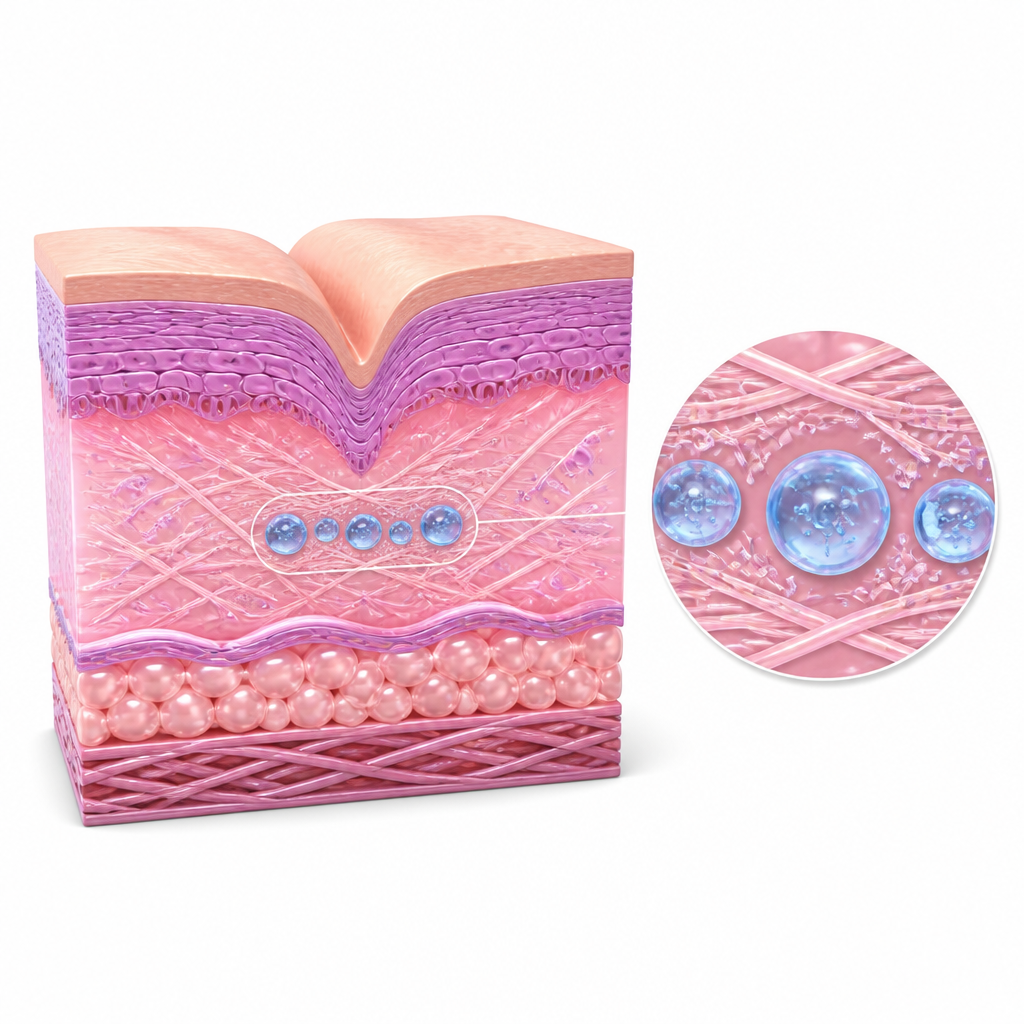
What are the primary differences between neck fillers and alternative non-surgical cervical therapies?
According to multiple observational studies and meta-analyses, including a comprehensive 2022 clinical review published in the Journal of Cosmetic Dermatology, addressing neck lines requires distinct approaches depending on whether the primary cause is volume loss, muscular pull, or superficial skin laxity. While dermal fillers directly replenish the depleted extracellular matrix to physically elevate deep horizontal creases, other modalities target different anatomical levels. For instance, botulinum toxin relaxes dynamic platysmal bands, whereas energy-based lifting devices stimulate neocollagenesis globally across the neck. To make an informed decision, patients must weigh the distinct therapeutic mechanisms, advantages, and limitations of each method.
| Treatment Modality | Primary Target Mechanism | Key Advantage | Key Limitation |
|---|---|---|---|
| Dermal Filler | Intradermal volume restoration and localized hydration via hyaluronic acid | Immediate structural lifting of deep, static horizontal creases | Requires exceptional injection precision to prevent superficial lump formation |
| Botulinum Toxin | Neuromuscular relaxation of hyperactive platysmal bands | Minimizes dynamic wrinkling during speech and motion | Provides no physical volume correction for deep static fractures |
| Energy-Based Devices (EBD) | Thermal-induced neocollagenesis and deep tissue tightening | Improves overall skin laxity and dermal density globally | Requires multiple sessions and lacks immediate localized volume impact |
According to official guidelines from the International Society of Aesthetic Plastic Surgery (ISAPS) updated in 2023, the restoration of delicate cervical tissues yields the highest patient satisfaction when clinicians combine targeted micro-droplet dermal fillers for static folds with neuromodulators to address platysmal hyperactivity, rather than relying on a single treatment modality.
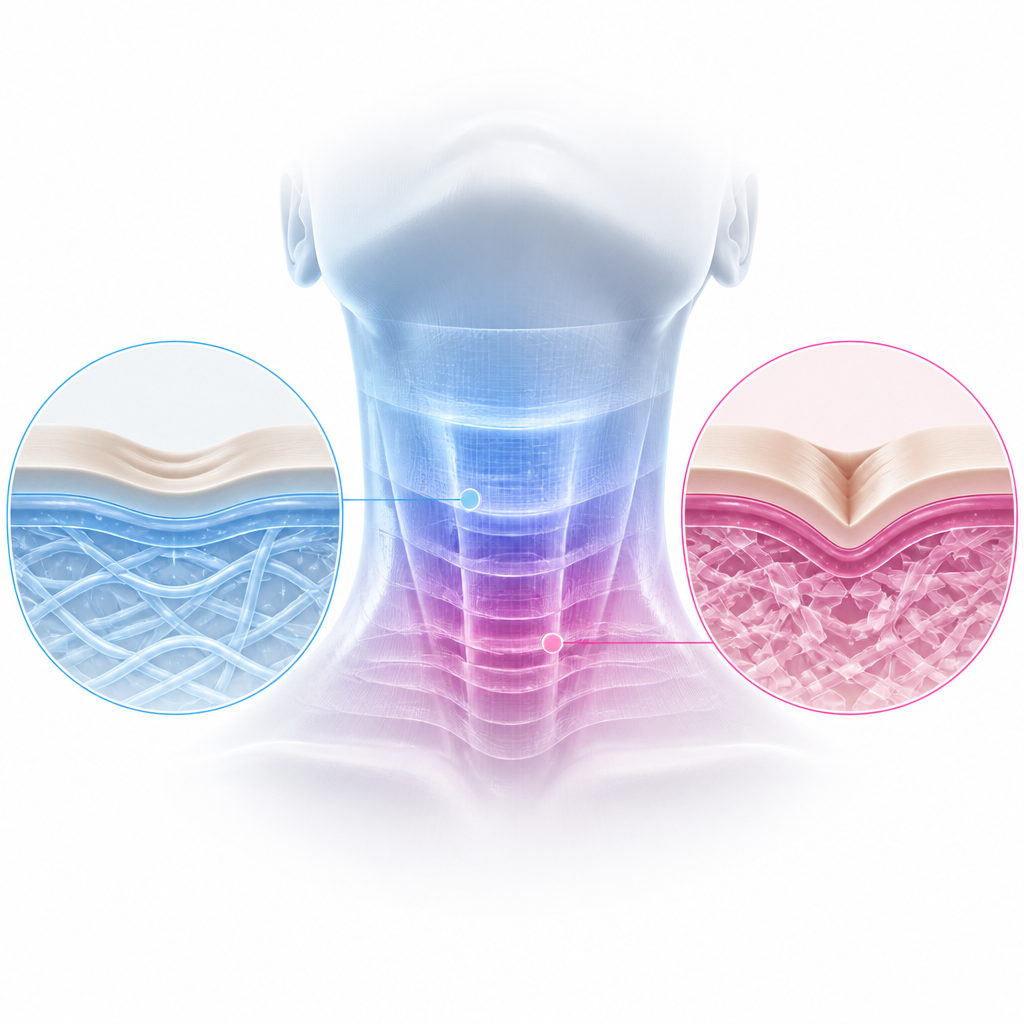
What clinical criteria should you evaluate before deciding on a neck filler treatment in Samseong-dong?
Achieving a smooth, natural cervical contour through dermal filler requires a highly individualized clinical strategy. Because the neck skin is thin and lacks structural rigidity, injecting highly cohesive hyaluronic acid with excessive viscoelasticity can lead to a visible, beaded appearance. Conversely, utilizing a filler that is too fluid may result in rapid degradation and insufficient structural support. When preparing for neck wrinkle management in Samseong-dong, a comprehensive diagnostic assessment must be conducted to evaluate the following parameters:
- Presence of Static Creases: Determine if horizontal lines are permanently etched into the dermis even when your neck is fully extended and relaxed.
- Dermal Thickness Assessment: Evaluate the thickness of the superficial neck skin to select a filler formulation with optimal cohesive properties and appropriate viscoelasticity.
- Platysmal Activity: Assess whether underlying muscle contractions (such as when clenching the jaw) are actively worsening the horizontal lines, indicating a need for co-treatment with botulinum toxin.
- Downtime Tolerance: Plan for a typical recovery window of 3 to 7 days, during which temporary swelling, redness, or minor papules may be visible on the delicate neck skin.
- Combination Requirements: Identify whether severe, tethered wrinkles require advanced techniques like mechanical subcision to release fibrotic bands before filler implantation.
To assist in your clinical decision-making process, specialists utilize a standardized If-Then clinical decision flow to determine the most logical therapeutic course:
- Step 1: If horizontal creases are primarily dynamic and skin elasticity remains robust, then prioritize non-invasive posture correction, topical medical-grade skincare, and preventive platysmal botulinum toxin.
- Step 2: If static horizontal creases are clearly defined but overall cervical skin laxity is mild to moderate, then proceed with precise intradermal micro-droplet hyaluronic acid filler to physically restore volume.
- Step 3: If deep, fibrotic neck wrinkles are accompanied by moderate-to-severe skin sagging, then implement a combination protocol of mechanical subcision, microfocused ultrasound lifting, and viscoelastic dermal filler.
However, outcomes may differ in exceptional cases such as patients presenting with severe post-inflammatory hyperpigmentation tendencies, active keloidal scarring disorders, or systemic autoimmune connective tissue diseases that impair normal healing responses.
Frequently Asked Questions FAQ
QIs the neck filler procedure painful, and how long does the recovery take?
Because the neck skin is highly sensitive, a high-concentration topical anesthetic cream is applied for approximately 30 to 40 minutes prior to the procedure. Most patients report only mild pressure and minimal discomfort during the actual micro-droplet injections. The immediate recovery phase typically involves mild redness, localized swelling, or tiny papules at the injection sites, which resemble minor insect bites. These temporary symptoms naturally resolve within 3 to 7 days. Applying prescribed post-treatment recovery ointments and avoiding intense physical exercise or extreme heat during this window will ensure a smooth, uneventful recovery.
QHow long do the aesthetic results of neck wrinkle fillers typically last?
The durability of neck fillers depends largely on the formulation utilized and individual metabolic factors. Because the neck is a highly mobile anatomical region, hyaluronic acid fillers designed for this area are formulated with low-to-moderate viscoelasticity to ensure natural movement, typically lasting between 6 to 12 months. Over time, these specialized fillers stimulate localized collagen stimulation, meaning that subsequent treatments often require less volume to maintain the same smooth aesthetic result.
QCan neck wrinkle fillers cause lumps, and how is this risk minimized?
Due to the extremely thin nature of the cervical dermis, superficial lumping or the Tyndall effect (a bluish discoloration of the skin) can occur if the filler is injected in excessive amounts or placed too superficially. This risk is minimized by utilizing a highly specialized micro-droplet injection technique, where tiny aliquots of filler are meticulously distributed across multiple anatomical planes. Consulting an experienced specialist who possesses a deep understanding of cervical anatomy and utilizes premium, highly cohesive fillers is the single most important factor in achieving a seamless, lump-free outcome.

This content is general medical information, and individual treatment decisions should be made through imaging tests and in-person medical evaluation.
Author: Medical content editor based on medical information research
Reviewed by: Specialist consultation from the relevant department
Last reviewed: 2026-07-27
Reference guideline: 2023 Consensus Recommendations for Cervical Rejuvenation
Medical neutrality and closing note
The core of medical decision-making is not to follow a specific device or a trending procedure, but to choose an option that fits each patient’s individual anatomy, condition, risk level, and treatment goals. Every procedure has both advantages and limitations, so decisions should be made after sufficient discussion with an experienced specialist.
[Medical information and copyright notice]
This content is a professional medical column prepared based on medical consultation from 청담큐비큐의원.
The infographics used in this article are created to support understanding and may differ from actual clinical results.
The information provided is a general medical guideline, and accurate diagnosis and treatment require an in-person evaluation by a qualified specialist.