Introduction: The Global Standard for Periorbital Rejuvenation
For many international patients exploring medical aesthetic options in South Korea, the quest for a refreshed and youthful appearance often begins with the periorbital area. The hollows beneath the eyes, medically known as the nasojugal groove or tear trough, can create an appearance of persistent fatigue regardless of one’s actual energy levels. As medical tourism to leading hubs like Seoul continues to rise, patients are increasingly seeking sophisticated solutions that go beyond simple volume replacement. Addressing this delicate area requires a profound understanding of eyelid anatomy, skin thickness, and the rheological properties of various injectable materials. This article explores the critical medical benchmarks that define a high-quality procedure and provides a roadmap for those considering treatment in a specialized medical district like Gangnam.
Line 1: Medically, the tear trough deformity is defined as a complex anatomical depression resulting from the attenuation of the orbital septum and the tight attachment of the orbicularis retaining ligament to the periosteum of the maxillary bone.
Line 2: Conditions under which non-surgical management remains reasonable include mild-to-moderate volume loss without significant pseudo-herniation of infraorbital fat or severe skin laxity.
Line 3: Criteria for choosing treatment must prioritize the physician’s anatomical knowledge of the danger zones, the cross-linking technology of the chosen material, and the anticipated recovery timeline for international travel.
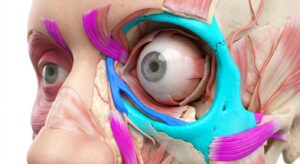
Understanding the Mechanism of Tear Trough Deformity
The transition from the lower eyelid to the cheek is one of the most anatomically unforgiving regions of the human face. The skin here is among the thinnest in the body, often measuring less than 0.5mm in thickness. According to multiple observational studies and meta-analyses, the appearance of “dark circles” is frequently a result of shadowing caused by anatomical hollows rather than actual skin pigmentation. This depression is typically formed by the tethering of the orbicularis retaining ligament, which pulls the skin inward against the underlying bone. As we age, the fat pads in the mid-face begin to descend or atrophy, further emphasizing this structural gap. International medical society guidelines indicate that successful correction requires a deep-plane injection strategy to lift the tissue without causing visible irregularities in the superficial dermal layer.
Clinical data from Korean medical centers suggests that the primary challenge in treating this area is the proximity to the infraorbital foramen and the complex vascular network surrounding the eye. For international patients, the goal of this treatment modality is not merely to “fill” a hole, but to restore a smooth, light-reflective transition between the eyelid and the cheek. Utilizing a micro-cannula rather than a traditional sharp needle has become a standard protocol for safety, as it significantly reduces the risk of intravascular injection and bruising—two factors critical for patients who must fly shortly after their procedure. However, in exceptional cases where the skin is extremely thick or the deformity is very localized, a specialized physician might still opt for a needle-based technique for higher precision.
Comparative Analysis: Treatment Modalities for the Infraorbital Region
When selecting a corrective method, patients must weigh the longevity, safety, and recovery profile of different materials. Hyaluronic acid (HA) remains the global gold standard for the infraorbital region due to its reversibility and high biocompatibility. Other options, such as autologous fat grafting, offer longer-lasting results but involve a more invasive surgical process. According to multiple peer-reviewed publications, the closure rate of the tear trough deformity with HA-based injectables exceeds 90% in suitable candidates when assessed at a 6-month follow-up. Each method possesses unique characteristics that must be matched to the patient’s specific facial architecture.
| Feature | Hyaluronic Acid Filler | Autologous Fat Grafting |
|---|---|---|
| Procedural Time | 15–30 minutes | 1–2 hours (requires liposuction) |
| Downtime (Edema) | 1–3 days (Minimal) | 7–14 days (Significant) |
| Reversibility | High (via Hyaluronidase) | None (requires surgical removal) |
| Mechanism | Direct volume supplementation | Cellular tissue transfer |
| Medical Limitation | Risk of Tyndall effect if too superficial | Potential for variable survival rate |
Recent public health statistics show that the demand for non-surgical options has surged because international travelers prioritize “weekend recovery” profiles. While fat grafting offers the advantage of using the patient’s own tissue, the unpredictability of fat cell survival means that a second session is often required. Conversely, the aforementioned procedure using HA allows for immediate refinement and adjustment. However, in exceptional cases where a patient has a severe allergy to filler components or desires a multi-year permanent solution alongside other facial surgeries, fat grafting may be considered the more medically appropriate choice despite the longer downtime.
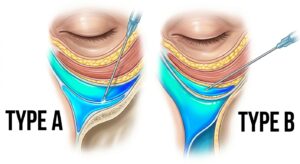
Medical Criteria for International Patient Safety
For those traveling to the medical institution from abroad, the standard of care must extend beyond the procedure room. The selection of the specific product is paramount. Hyaluronic acid products vary significantly in their G-prime (firmness) and cohesivity. For the under-eye area, a low-to-medium G-prime filler with low hydrophilic properties is essential to prevent “puffy” eyes caused by excessive water absorption. According to guidelines from the American Academy of Dermatology (AAD), using a product with high water-binding capacity in the infraorbital region can lead to chronic edema, a complication that is difficult to manage once the patient has returned to their home country.
Furthermore, the injection technique must be verified. A “sandwich technique” or a “deep bolus on bone” approach is often preferred by leading specialists in the region to ensure that the material is placed beneath the muscle. This prevents the Tyndall effect—a bluish discoloration caused by light scattering through filler placed too close to the skin surface. International medical society guidelines indicate that proper placement at the supraperiosteal level minimizes the risk of visible lumps during facial expression. However, in exceptional cases where the patient has extremely thin skin and no deep-fat support, even the most skilled physician may face challenges in achieving a completely seamless transition without multiple staged sessions.
Checklist: Preparing for Under-eye Treatment in South Korea
Before committing to a procedure, international patients should evaluate the medical facility against these professional benchmarks:
- Specialist Board Certification: Ensure the physician has verified expertise in dermatology or plastic surgery with a high volume of periorbital cases.
- Product Transparency: The facility should provide the specific brand and batch number of the hyaluronic acid treatment used (e.g., Restylane, Juvederm, or high-quality local brands like Belotero).
- Imaging Technology: Presence of high-resolution skin analysis or 3D modeling to accurately map the depth of the tear trough.
- International Support: Availability of English-speaking staff and a structured follow-up protocol for patients returning home.
- Emergency Protocol: The clinic must have hyaluronidase (the dissolving agent) and vascular emergency kits on-site at all times.
However, in exceptional cases where a patient has an active infection or an autoimmune flare-up, the procedure must be postponed regardless of the travel schedule.
Decision-Making Mini-Flow
- If: You have mild hollowing and a busy travel schedule → Then: Prioritize a low-hydrophilic HA filler for a 2-day recovery.
- If: You have significant skin laxity and protruding “eye bags” → Then: Consider a combination of laser tightening or surgical lower blepharoplasty.
- If: You have a history of filler sensitivity or chronic swelling → Then: Pursue detailed ultrasound-guided evaluation before any injection.
However, in exceptional cases where the anatomical cause is purely hyperpigmentation (melasma), fillers will not provide the desired brightening effect.
FAQ for International Medical Tourists
Q1: How long should I plan to stay in the city for this procedure?
A: While the procedure itself takes less than 30 minutes, we recommend staying at least 3 to 4 days. According to multiple peer-reviewed publications, most minor swelling or potential bruising resolves within this window, allowing for a safe follow-up check before your flight.
Q2: Can I get this treatment if I have a flight the next day?
A: While many patients do so, international medical society guidelines indicate that the change in cabin pressure can sometimes exacerbate initial swelling. A 48-hour buffer is medically ideal to ensure the product has settled and no immediate adverse reactions occur.
Q3: Is English-language consultation typically available at premium clinics?
A: Yes, many leading centers in the region employ dedicated international coordinators. This ensures that the nuance of your aesthetic goals and your medical history are accurately communicated to the specialist physician.
Q4: How do I coordinate follow-up care if I live in another country?
A: High-end medical institutions provide digital records and “procedure certificates” that you can share with your local physician. This documentation includes the exact injection depth, volume, and material used for your safety.

Conclusion: The Importance of Clinical Judgment
The success of infraorbital rejuvenation is not defined by the volume of material used, but by the precision of its placement. For international patients, the value of seeking treatment in a high-volume medical hub lies in the standardized protocols and the extensive clinical experience of the practitioners. By understanding the anatomical complexities and demanding transparency in product selection, patients can achieve a natural, rested appearance that enhances their overall facial harmony. This content is provided for general medical information purposes, and individual diagnostic and treatment decisions should be made through consultation with qualified medical professionals.
Medical Neutrality and Closing Notes
The essence of this treatment lies not in following a specific device or trending technique, but in making the medical choice most suited to each patient’s individual anatomy and condition. Every procedure has both advantages and limitations, and thorough consultation with a qualified specialist is essential before any decision.
[Medical Information Disclosure and Copyright Notice]
• This content has been produced as a professional medical column based on the medical advisory of 청담큐비큐의원, a medical institution located in South Korea.
• Infographics used in this article were created with the assistance of AI technology for illustrative purposes and may differ from actual clinical outcomes.
• The information provided reflects general medical guidelines. For accurate diagnosis and treatment, please visit a qualified medical institution and consult directly with a specialist.
• For inquiries regarding English-language consultation, international patient services, or medical travel arrangements, please contact the medical institution directly.
Author: Medical Content Editor (Based on Medical Literature Research)
Medical Review: Specialist in Dermatology
Last Reviewed: {TODAY_DATE}
Reference Guidelines: International Society of Aesthetic Plastic Surgery (ISAPS), American Academy of Dermatology (AAD) (2023-2024 Guidelines)