Understanding the Lifecycle of Periorbital Restoration
For many international patients exploring aesthetic enhancements, addressing the hollows beneath the eyes is a primary concern. This anatomical region, often referred to as the tear trough, is exceptionally delicate due to the thinness of the skin and the complex vascular network residing just beneath the surface. South Korea has emerged as a global hub for these specialized procedures, where refined injection techniques are utilized to provide natural-looking volume. However, one of the most frequent questions from patients traveling for care concerns the duration of the effect. Determining how long a tear trough treatment remains effective involves a sophisticated interplay between the biological properties of the product, the patient’s unique metabolic rate, and the anatomical characteristics of the infraorbital region.
• Medically, under-eye hollowing is defined as the progressive loss of subcutaneous fat and the weakening of the orbital septum, leading to a visible depression along the infraorbital margin.
• Conditions under which conservative management, such as topical retinoids or medical-grade sun protection, remains reasonable include early-stage volume loss or cases where hyperpigmentation is the primary aesthetic concern rather than structural hollowing.
• When choosing a treatment, international patients should prioritize criteria such as product rheology (G-prime), the specialist’s experience with the cannula technique, and the projected recovery timeline in relation to their travel schedule.

Comparative Analysis: Longevity and Material Characteristics
According to multiple peer-reviewed publications, the longevity of soft tissue augmentation in the periorbital varies significantly based on the chemical cross-linking of the hyaluronic acid utilized. While some formulations are designed for immediate integration and soft contouring, others offer a higher degree of structural support. Clinical data from Korean medical centers suggests that high-viscosity products tend to resist enzymatic degradation more effectively, though they require more precise placement to avoid visibility. However, in exceptional cases where the patient possesses extremely thin dermis, using a high-density material may lead to palpable irregularities.
| Feature | Standard HA Filler | Collagen Stimulating Agents |
|---|---|---|
| Typical Duration | 6 to 12 months | 18 to 24 months |
| Mechanism | Physical volume replacement | Neocollagenesis induction |
| Downtime Range | 1–3 days | 3–7 days |
| Reversibility | Immediately reversible via enzyme | Generally non-reversible |
| Key Limitation | Potential for Tyndall effect | Delayed onset of visible results |
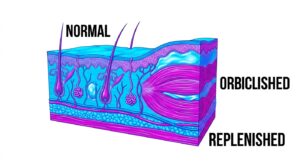
Biological and Anatomical Factors Influencing Duration
International medical society guidelines indicate that the periorbital region is a low-mobility zone compared to the perioral area, which theoretically extends the life of the injectable material. However, the high vascularity of the lower eyelid means that metabolic turnover of hyaluronic acid can be more rapid in certain individuals. The depth of injection plays a critical role; material placed sub-muscularly, beneath the orbicularis oculi, often demonstrates greater stability than material placed superficially. According to multiple observational studies and meta-analyses, patients with high metabolic rates or those who engage in frequent intense thermogenic activities may observe a reduction in the duration of the effect to approximately 5 to 7 months.
The concept of “G-prime,” or the elastic modulus of the substance, is central to its longevity. In the specialized clinics in the region, practitioners often select a medium-to-low G-prime product for the tear trough to ensure it mimics the natural softness of the surrounding tissue. This decision-making process is a balance between aesthetic integration and the desire for long-lasting results. Recent public health statistics show that approximately 15% of patients may require a minor “touch-up” session within the first 3 months to optimize the contour as the initial product settles and integrates with the host tissue. However, in exceptional cases where significant lymphatic congestion is present, the presence of the foreign material might exacerbate temporary edema, necessitating a different clinical approach.
Selection Criteria for International Patients
When traveling for medical services, the window for follow-up care is often compressed. This makes the choice of a high-stability product and a conservative injection volume paramount. According to multiple peer-reviewed publications, the use of blunt-tipped cannulas rather than sharp needles has been shown to reduce the incidence of hematoma and intravascular compromise, which is essential for patients who must board a flight shortly after their procedure. The medical institution should provide a clear protocol for post-treatment care that the patient can follow once they return to their home country. However, in exceptional cases where a delayed inflammatory response occurs after international travel, coordination between the local medical community and the original treating physician becomes necessary.
Clinical data from Korean medical centers suggests that the average duration of a tear trough augmentation using modern cross-linked technology is approximately 9 to 14 months for the majority of patients. This timeframe is often sufficient for medical tourists to plan their maintenance visits around annual or biennial travel. International patients should also be aware of the “Tyndall effect,” a bluish discoloration that can occur if the hyaluronic acid treatment is placed too superficially. To mitigate this, advanced practitioners often employ a “sandwich technique,” layering different densities of material at varying depths to achieve a three-dimensional correction that withstands the test of time. Recent public health statistics show that the satisfaction rate for these periorbital procedures remains above 90% when performed by board-certified specialists using standardized protocols.
Checklist for Maximizing Longevity and Safety
- Verify that the product is a recognized, FDA or CE-approved hyaluronic acid formulation with a proven safety profile.
- Avoid intense heat (saunas, hot yoga) and strenuous exercise for at least 72 hours post-injection to prevent premature displacement.
- Maintain adequate systemic hydration, as hyaluronic acid is hydrophilic and requires water to maintain its structural volume.
- Plan your return flight at least 48 to 72 hours after the procedure to allow for initial swelling to subside and for a follow-up safety check.
- Identify a local board-certified dermatologist who can assist with long-term monitoring once you return home.
• If: The tear trough hollowing is accompanied by significant skin laxity → Then: Consider a combination of ultrasound lifting and infraorbital hyaluronic acid therapy.
• If: There is a history of severe allergies or previous adverse reactions to injectables → Then: Prioritize conservative management or a staged approach with small test volumes.
• If: The primary goal is a result lasting longer than 18 months → Then: Evaluate the suitability of collagen stimulators or autologous fat transfer.
*However, in exceptional cases where the anatomical hollow is caused by structural bone resorption rather than fat loss, the aforementioned procedure may have limited efficacy.*
Frequently Asked Questions by International Patients
Q: How soon can I fly back home after my under-eye procedure?
A: Most practitioners suggest waiting at least 48 hours. While flying itself does not degrade the material, the cabin pressure changes can occasionally exacerbate minor swelling. Ensuring you are past the immediate post-procedure window allows for a safety assessment before you depart the medical institution.
Q: Can the longevity be extended through specific lifestyle changes?
A: According to multiple observational studies and meta-analyses, while you cannot stop the natural enzymatic breakdown, avoiding excessive UV exposure and maintaining a healthy skin barrier can preserve the quality of the overlying dermis, making the results appear fresher for longer. Constant rubbing of the eyes can also mechanically accelerate the integration and breakdown of the periorbital injection.
Q: Is English-language support commonly available for post-care questions?
A: Leading providers in the region typically offer dedicated international coordination teams. These teams facilitate communication via digital platforms, allowing patients to send photos and receive guidance if they have concerns after returning to their home country. This continuity of care is a hallmark of the premium experience in South Korea.

This content represents general medical information, and individual treatment decisions should be made through imaging diagnostics and in-person consultation with a qualified medical professional.
Medical Review: Specialist in Dermatology
Last Reviewed: {TODAY_DATE}
Reference Guidelines: American Society of Plastic Surgeons (ASPS) Guidelines 2023; International Society of Aesthetic Plastic Surgery (ISAPS) Patient Safety Protocols.
Medical Neutrality and Closing Notes
The essence of this treatment lies not in following a specific device or trending technique, but in making the medical choice most suited to each patient’s individual anatomy and condition. Every procedure has both advantages and limitations, and thorough consultation with a qualified specialist is essential before any decision. This content is provided for general medical information purposes, and individual diagnostic and treatment decisions should be made through consultation with qualified medical professionals.
[Medical Information Disclosure and Copyright Notice]
• This content has been produced as a professional medical column based on the medical advisory of 청담큐비큐의원, a medical institution located in South Korea.
• Infographics used in this article were created with the assistance of AI technology for illustrative purposes and may differ from actual clinical outcomes.
• The information provided reflects general medical guidelines. For accurate diagnosis and treatment, please visit a qualified medical institution and consult directly with a specialist.
• For inquiries regarding English-language consultation, international patient services, or medical travel arrangements, please contact the medical institution directly.