How to Correct Aging Hands Safely: Dermal Fillers, Anatomical Criteria, and Complication Prevention
Why Do Our Hands Age Faster Than Our Faces, and What Can Be Done?
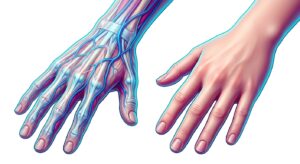
While we invest heavily in facial rejuvenation, the hands are often neglected, serving as a primary indicator of physiological age. As time progresses, the dorsal aspect of the hands undergoes significant anatomical transformations. The skin loses its structural resilience due to cumulative ultraviolet radiation and natural aging, leading to dermal thinning. This degradation of the extracellular matrix is accompanied by subcutaneous tissue atrophy, exposing underlying structural networks such as veins, tendons, and bony prominences. Understanding these anatomical shifts is key to selecting the correct dermatological intervention.
Treatment timing: When the superficial dorsal lamina thins significantly, making extensor tendons and dorsal veins clearly visible (Grade 3 on the Merz Hand Grading Scale).
Non-surgical care: Conservative management using topical retinoids and strict UV protection is reasonable during early-stage thinning before deep structural hollows form.
Treatment selection: Decisions are guided by the patient’s skin laxity, the depth of intermetacarpal depression, and the required viscoelasticity of the filler material to ensure seamless integration with natural hand movements.
How Does the Pathophysiology of Hand Aging Dictate the Choice of Treatment?
Dorsal hand aging is a progressive physiological process characterized by subcutaneous tissue atrophy, dermal thinning, and the degradation of collagen fibers. Unlike facial skin, the skin on the dorsum of the hand is exceptionally thin and contains fewer sebaceous glands, making it highly susceptible to environmental damage. Over time, the loss of fat pads in the superficial lamina reveals the underlying structures, creating a skeletal appearance that is difficult to reverse through superficial skincare alone.
According to multiple observational studies and meta-analyses published in the Journal of Cosmetic Dermatology (2022), patient satisfaction rates for dorsal volume restoration exceed 92% when high-cohesivity hyaluronic acid fillers are utilized. While topical treatments and non-surgical energy-based devices can improve skin texture and address senile purpura or solar lentigines, they cannot restore lost structural volume. For deep hollowing, soft tissue fillers offer a minimally invasive, highly effective solution. Below is a comparison of the primary clinical modalities used for hand rejuvenation:
| Treatment Modality | Key Advantage | Clinical Limitation |
|---|---|---|
| Hyaluronic Acid Filler | Immediate, predictable volume correction with high reversibility using hyaluronidase. | Temporary duration, typically requiring repeat treatments every 12 to 18 months. |
| Autologous Fat Grafting | Long-term or permanent volume restoration using the patient’s own tissue. | Requires surgical fat harvesting and features highly unpredictable fat survival rates. |
| Collagen Stimulators | Gradual, natural neocollagenesis that improves dermal thickness over time. | Delayed onset of results, requiring multiple sessions and carrying a risk of nodule formation. |
However, outcomes may differ in exceptional cases such as patients with severe autoimmune connective tissue disorders, extreme skin laxity, or active dermatological infections on the dorsal hand, where alternative clinical pathways must be prioritized.
According to official clinical guidelines from the American Society for Dermatologic Surgery (ASDS), both quantitative grading criteria and patient-specific anatomical variations must be evaluated together to determine the optimal injection depth.

What Is the Safe Protocol for Restoring Volume without Side Effects?
To avoid complications such as the Tyndall effect (a bluish discoloration of the skin caused by light scattering through superficial filler) or surface lumpiness, clinicians must follow strict injection protocols. The choice of filler material is paramount; a product with high viscoelasticity and balanced hyaluronic acid cohesivity is essential to withstand the constant mechanical movement of the hands without migrating or clumping. Furthermore, utilizing a blunt-tip cannula injection technique dramatically reduces the risk of intravascular injection, bruising, and injury to the sensory nerves and superficial veins.
When considering hand rejuvenation, a comprehensive evaluation must be conducted. The following checklist outlines the essential steps for a safe and successful procedure:
- Anatomical Mapping: Assessment of the dorsal veins and extensor tendons to identify target hollowing.
- Cannula Selection: Use of a 22G to 25G blunt-tip cannula to navigate the superficial lamina safely.
- Product Optimization: Selecting a filler with appropriate rheological properties to ensure smooth tissue integration.
- Injection Depth: Precise placement of the filler directly into the superficial dorsal lamina, avoiding deeper fascial structures.
- Post-Procedure Molding: Gentle manual massage immediately following the injection to ensure even distribution.
To help guide the clinical path, the following decision-making flow represents the standard patient journey:
Step 1 (Assessment): If the patient presenting with hand aging exhibits prominent skeletonization with visible tendons, then conduct a physical assessment to confirm sufficient dermal integrity.
Step 2 (Treatment Selection): If the assessment confirms moderate-to-severe volume loss without active inflammation, then proceed with a high-cohesivity hyaluronic acid filler using a blunt-tip cannula.
Step 3 (Post-Care & Monitoring): If the procedure is completed, then perform precise molding and schedule a follow-up assessment in 2 weeks to monitor integration and patient satisfaction.
Frequently Asked Questions FAQ
QIs the procedure painful, and how long is the recovery period?
Most patients experience minimal discomfort as modern fillers are pre-mixed with lidocaine, a local anesthetic. A topical anesthetic may also be applied prior to the cannula injection. Mild swelling, tenderness, or localized bruising may occur post-procedure, but these effects typically resolve within 3 to 7 days, requiring no downtime.
QCan hand fillers cause the Tyndall effect or lumpy skin?
Yes, if the filler is injected too superficially or if a product with poor viscoelasticity is chosen, it can result in a bluish skin discoloration (Tyndall effect) or visible nodules. These risks are minimized by utilizing high-cohesivity hyaluronic acid fillers placed carefully in the correct subcutaneous plane by an experienced specialist.
QHow long do the results of hand filler treatment typically last?
Depending on the specific rheology of the filler used and the patient’s individual metabolic rate, the volume-restoring results typically persist for 12 to 18 months. Regular touch-up procedures can help maintain a youthful, smooth appearance over the long term.

This content is general medical information, and individual treatment decisions should be made through imaging tests and in-person medical evaluation.
Author: Medical content editor based on medical information research
Reviewed by: Specialist consultation from the relevant department
Last reviewed: 2026-07-28
Reference guideline: 2022 Consensus Guidelines for Hand Rejuvenation
Medical neutrality and closing note
The core of medical decision-making is not to follow a specific device or a trending procedure, but to choose an option that fits each patient’s individual anatomy, condition, risk level, and treatment goals. Every procedure has both advantages and limitations, so decisions should be made after sufficient discussion with an experienced specialist.
[Medical information and copyright notice]
This content is a professional medical column prepared based on medical consultation from 청담큐비큐의원.
The infographics used in this article are created to support understanding and may differ from actual clinical results.
The information provided is a general medical guideline, and accurate diagnosis and treatment require an in-person evaluation by a qualified specialist.