Is Stem Cell Therapy the Safe Choice for Damaged Skin Recovery in Dermatology?
Why Does Damaged Skin Fail to Regenerate Naturally After Severe Barrier Disruption?
The human skin barrier, primarily composed of the stratum corneum and intercellular lipids, undergoes continuous cellular turnover. However, chronic inflammation, aggressive dermatological treatments, or chemical injuries can severely damage this structure. The pathophysiological mechanism of severe skin damage involves the depletion of functional keratinocyte stem cells within the basal lamina, resulting in a progressive decline in extracellular matrix synthesis and a persistent inflammatory microenvironment. When this depletion occurs, the skin loses its capability for self-renewal, leading to visible thinning, chronic redness, and increased susceptibility to environmental pathogens.
Treatment timing: Initiating therapy during the early proliferative phase of wound healing, typically 3 to 10 days post-injury, yields the most optimal regenerative response.
Non-surgical care: Conservative management using medical-grade occlusive dressings and topical lipid-replenishing agents is reasonable if the basement membrane zone remains physically intact.
Treatment selection: Patient selection must be guided by the depth of dermal tissue loss, the presence of active microvascular damage, and the patient’s individual capacity for cellular signaling.
How Do Stem Cell Therapies Compare to Traditional Skin Boosters in Clinical Efficacy?
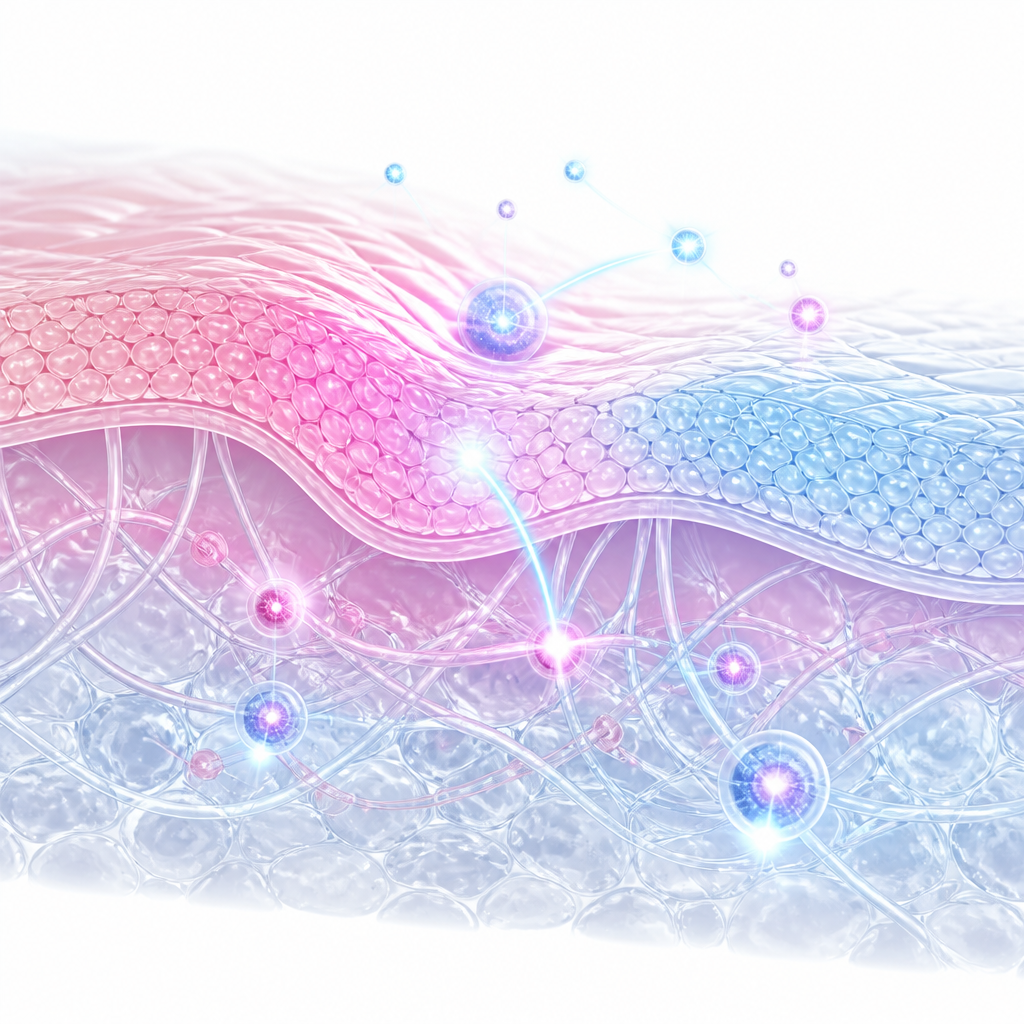
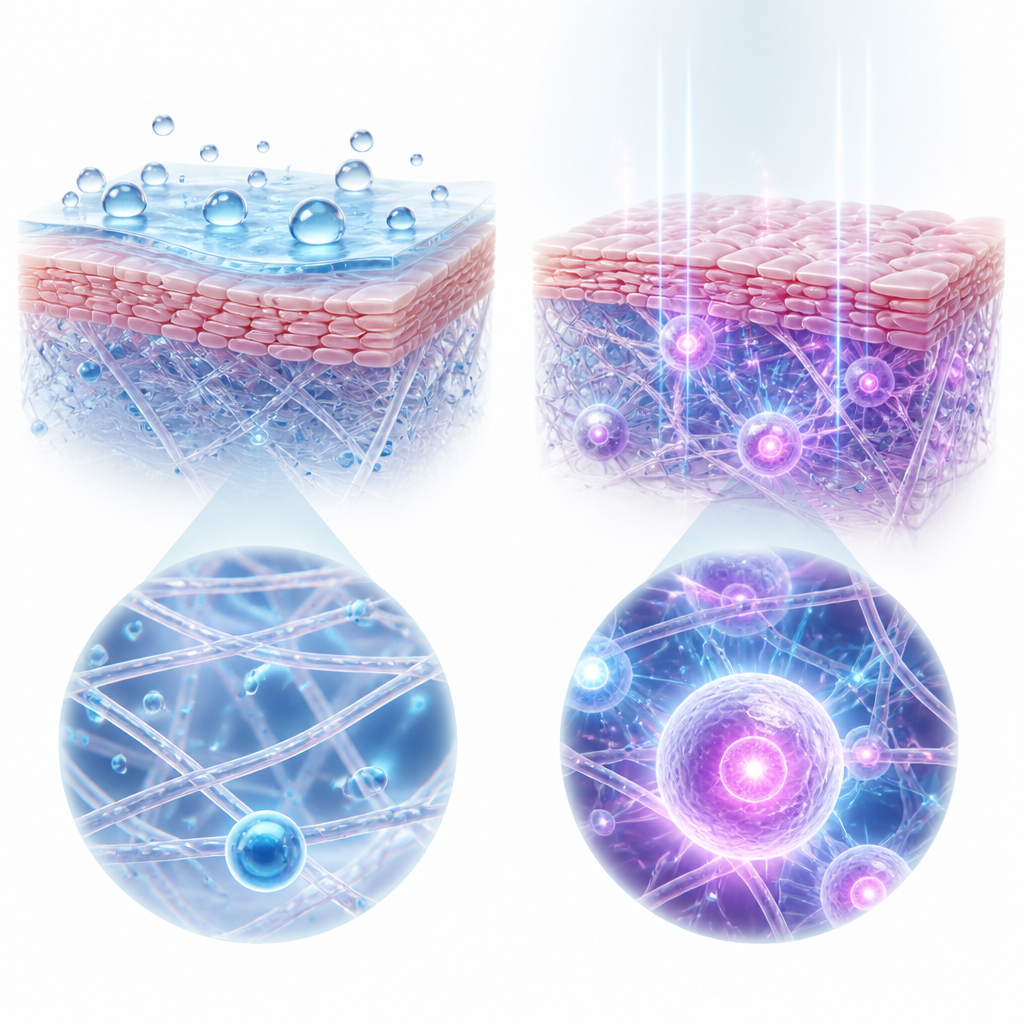
To understand skin restoration, we must analyze the key cellular pathways. Traditional therapies, such as hyaluronic acid boosters, focus on temporary superficial hydration. In contrast, advanced stem cell-conditioned media and exosomes utilize paracrine signaling to directly stimulate fibroblasts and upregulate collagen production. According to multiple observational studies and meta-analyses published in the Journal of Dermatological Science (2022), stem cell-conditioned media therapies demonstrated a 45% increase in collagen type I synthesis compared to standard hyaluronic acid applications over a 12-week observational period. This biological activity is crucial for restoring dermal thickness and elasticity in severely compromised skin.
| Therapy Type | Primary Mechanism | Clinical Advantage | Clinical Limitation |
|---|---|---|---|
| Stem Cell Exosomes | Paracrine signaling and intercellular vesicle transfer | Direct stimulation of fibroblasts and rapid reduction of inflammatory cytokines | Requires rigorous temperature-controlled storage and highly standardized preparation |
| Hyaluronic Acid Boosters | Hydrophilic moisture binding in the extracellular matrix | Immediate dermal hydration and high biocompatibility with minimal side effects | Temporary volume-filling effect with limited capability for cellular regeneration |
According to official guidelines and academic evidence from international medical societies, both quantitative biological markers and clinical structural assessment must be evaluated prior to initiating advanced regenerative treatments.
While stem cell-conditioned media represents a significant technological leap in dermatological recovery, patient selection is paramount. However, outcomes may differ in exceptional cases such as patients presenting with underlying systemic autoimmune conditions or active localized dermatological infections that interfere with normal wound healing cascades.
What Are the Key Diagnostic Criteria for Selecting Stem Cell Therapy?
Before proceeding with advanced cellular recovery at 청담큐비큐의원, a thorough assessment is required to evaluate the suitability of the dermal microenvironment. Applying stem cell-derived therapeutics requires strict adherence to safety standards and diagnostic metrics to ensure safety and clinical efficacy.
- Transepidermal Water Loss (TEWL): Quantitative measurement of skin barrier integrity to assess baseline dysfunction.
- Dermal Thickness Assessment: Evaluating the degree of collagen depletion via high-frequency ultrasound.
- Vascular Density Analysis: Identifying localized microvascular damage or persistent erythema.
- Histological Condition: Reviewing the health of the extracellular matrix and fibroblast activity levels.
To streamline the clinical decision-making process, dermatologists follow a structured, multi-step mini flow:
Step 1 (If TEWL is below 20 g/m²/h): Then proceed with conservative barrier restoration using topical ceramides and physiological lipids to allow natural repair.
Step 2 (If epidermal-dermal junction shows structural degradation): Then initiate targeted exosome or stem cell-conditioned media therapy to promote fibroblast activation and dermal remodeling.
Step 3 (If severe chronic ulceration or tissue necrosis is present): Then combine stem cell-derived therapeutics with advanced vascular laser therapies and multidisciplinary medical review.
Frequently Asked Questions FAQ
QIs stem cell therapy safe for highly sensitive or reactive skin types?
Yes, when administered under strict clinical protocols. Stem cell-conditioned media and purified exosomes do not contain cellular nuclei, which drastically reduces the risk of immunogenic reactions. However, patients must undergo a pre-treatment skin sensitivity analysis to ensure the skin barrier can tolerate the delivery method, whether topically applied or facilitated via micro-needling.
QHow long does the recovery process take after a stem cell skin recovery procedure?
The initial superficial recovery typically occurs within 24 to 48 hours, characterized by a reduction in redness and swelling. On a cellular level, dermal remodeling and neocollagenesis continue progressively over a span of 3 to 6 weeks, with cumulative improvements observed after multiple scheduled sessions.
QWhen is conservative management preferred over stem cell treatments?
Conservative management is preferred during the acute phase of an active dermatological infection or when the skin barrier disruption is highly superficial and capable of self-resolution within a standard 14-day cellular turnover cycle.
This content is general medical information, and individual treatment decisions should be made through imaging tests and in-person medical evaluation.
Author: Medical content editor based on medical information research
Reviewed by: Specialist consultation from the relevant department
Last reviewed: 2026-07-30
Reference guideline: 2023 International Society for Stem Cell Research (ISSCR) Guidelines
Medical neutrality and closing note
The core of medical decision-making is not to follow a specific device or a trending procedure, but to choose an option that fits each patient’s individual anatomy, condition, risk level, and treatment goals. Every procedure has both advantages and limitations, so decisions should be made after sufficient discussion with an experienced specialist.
[Medical information and copyright notice]
This content is a professional medical column prepared based on medical consultation from 청담큐비큐의원.
The infographics used in this article are created to support understanding and may differ from actual clinical results.
The information provided is a general medical guideline, and accurate diagnosis and treatment require an in-person evaluation by a qualified specialist.