Is Pelvic Filler the Right Choice for Your Body Volume Goals in Samseong-dong?
Why is Lateral Hip Volume Crucial for Overall Silhouette Balance?
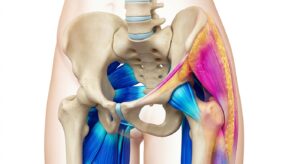
Anatomically, lateral hip depressions—commonly referred to as hip dips—are natural skeletal indentations located between the iliac crest and the greater trochanter of the femur. This structural gap is often genetically predetermined and cannot be completely resolved through muscular hypertrophy or dietary modifications alone. A progressive decrease in localized subcutaneous fat over time can further accentuate these depressions, altering the overall symmetry and flow of the pelvic silhouette.
Pelvic filler procedures serve as a targeted intervention to address these anatomical voids. By delivering a highly cohesive, biocompatible substance into the subcutaneous plane, specialists can smoothly contour the lateral profile, enhancing tissue integration and overall structural balance. This approach bypasses the need for invasive surgical interventions while offering immediate, measurable improvements in lateral projection.
Treatment timing: Ideal when structural hip dips persist despite targeted gluteal muscle training, or when immediate contour restoration is preferred without undergoing surgical recovery.
Non-surgical care: Conservative management, including focused gluteus medius exercises and compression wear, is highly reasonable for mild depressions but has structural limitations for moderate-to-severe skeletal voids.
Treatment selection: Decisions are guided by individual subcutaneous layer depth, localized tissue elasticity, skin thickness, and the patient’s long-term volume maintenance expectations.
How Do Pelvic Fillers Compare to Surgical Autologous Fat Transfer?
According to multiple clinical observational studies and meta-analyses, choosing between non-surgical gel-based augmentation and autologous fat grafting depends heavily on available donor site fat and the patient’s tolerance for surgical risks. While surgical options offer permanent volume retention, they require a donor site harvest (liposuction), anesthesia, and a prolonged recovery window characterized by localized swelling and bruising. Pelvic filler, specifically utilizing high-viscosity hyaluronic acid, allows for precise, localized sculpting with negligible downtime.
To assist in making an informed decision, the following comparison highlights the primary operational and clinical distinctions between these two dominant approaches:
| Parameter | Hyaluronic Acid Pelvic Filler | Autologous Fat Transfer |
|---|---|---|
| Primary Advantage | No donor site required; immediate contour adjustment; completely reversible. | Semi-permanent results once fat cells establish localized blood supply. |
| Key Limitation | Gradual biodegradation over 18 to 24 months, requiring periodic maintenance. | Unpredictable fat survival rate (typically 30% to 70%); requires surgical liposuction. |
| Recovery Time | 1 to 3 days (minor soreness or transient swelling). | 2 to 4 weeks (donor site healing, compression garment required). |
| Procedural Method | Local anesthesia; micro-cannula subcutaneous injection. | Sedation or general anesthesia; liposuction followed by purification and reinjection. |
According to official guidelines from international aesthetic plastic surgery societies, both quantitative tissue thickness criteria and individual anatomical variations must be thoroughly reviewed prior to any lateral gluteal or pelvic augmentation.
However, outcomes may differ in exceptional cases such as patients presenting with severe systemic autoimmune connective tissue diseases, or those with highly compromised subcutaneous tissue matrixes who may exhibit poor filler retention and increased risks of volume migration.
What Is the Clinical Protocol for Ensuring Safety and Tissue Integration?
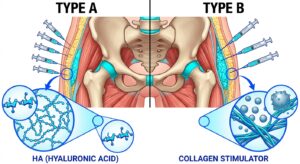
To achieve seamless tissue integration and prevent adverse outcomes such as nodule formation or asymmetry, adherence to a strict clinical protocol is necessary. The procedure must target the deep subcutaneous plane, well above the gluteal muscle fascia, avoiding key major blood vessels. Utilizing a specialized blunt-tip cannula significantly reduces the risk of accidental intravascular injection, ensuring that the high-density hyaluronic acid gel is distributed uniformly across the target zones in Samseong-dong.
The following checklist outlines the essential safety standards that should be observed before and during the body volume contouring process:
- Comprehensive pre-treatment evaluation of pelvic symmetry and skin elasticity under weight-bearing conditions.
- Verification of KFDA or CE-approved, high-viscosity body-specific hyaluronic acid formulations.
- Use of sterile, single-use blunt-tip micro-cannulas to minimize vascular trauma and tissue disruption.
- Strict placement of the implant within the deep subcutaneous fat layer to support natural movement and touch.
- Incremental layering of the volume to avoid localized over-pressurization of the tissue matrix.
- Clear post-treatment protocols, emphasizing the avoidance of localized external pressure for a specified period.
If-Then Decision Framework for Body Contouring
Step 1: If lateral hip depressions persist despite consistent exercise and are accompanied by sufficient skin elasticity, then consult with a specialist to assess subcutaneous tissue depth.
Step 2: If the patient prefers to avoid surgical complications and desires a rapid return to daily activities, then select high-viscosity hyaluronic acid pelvic filler over surgical fat transfer.
Step 3: If the procedure is completed, then maintain strict compliance with recovery instructions, avoiding strenuous lower-body exercise and prolonged lateral pressure for at least 14 days.
Frequently Asked Questions FAQ
QWhat is the typical longevity of pelvic body fillers?
On average, high-viscosity hyaluronic acid body fillers retain their structural volume for approximately 18 to 24 months. The exact duration varies based on the patient’s metabolic rate, localized physical activity levels, and the precise depth of the injection plane. Over time, the material safely and gradually undergoes natural enzymatic biodegradation within the body.
QAre there immediate restrictions after receiving pelvic fillers in Samseong-dong?
Yes. To prevent volume migration and ensure optimal tissue integration, patients must avoid sleeping on their sides or applying direct pressure to the treated hip areas for approximately two weeks. Additionally, high-intensity lower-body exercises, saunas, and hot baths should be avoided during this initial recovery phase.
QHow is the risk of post-procedure nodule formation minimized?
Nodule formation is minimized by ensuring the filler is distributed in thin, uniform layers within the deep subcutaneous plane rather than a single large bolus. Utilizing precise cannula techniques and undergoing a professional post-procedure check-up at Dermatology further ensures the gel integrates smoothly without localized clumping.

This content is general medical information, and individual treatment decisions should be made through imaging tests and in-person medical evaluation.
Author: Medical content editor based on medical information research
Reviewed by: Specialist consultation from the relevant department
Last reviewed: 2026-06-19
Reference guideline: 2023 International Society of Aesthetic Plastic Surgery (ISAPS) Body Contouring Consensus Guidelines
Medical neutrality and closing note
The core of medical decision-making is not to follow a specific device or a trending procedure, but to choose an option that fits each patient’s individual anatomy, condition, risk level, and treatment goals. Every procedure has both advantages and limitations, so decisions should be made after sufficient discussion with an experienced specialist.
[Medical information and copyright notice]
This content is a professional medical column prepared based on medical consultation from 청담큐비큐의원.
The infographics used in this article are created to support understanding and may differ from actual clinical results.
The information provided is a general medical guideline, and accurate diagnosis and treatment require an in-person evaluation by a qualified specialist.