Is Simultaneous Lip Filler and Corner Lift Safe? Efficacy, Anatomical Risks, and Treatment Selection Criteria
Why is the demand for simultaneous perioral treatments increasing in modern dermatology?
The perioral region is one of the most dynamic and anatomically complex areas of the human face. As aging progresses, structural changes occur not only within the skin layers but also in the underlying musculature, deep fat pads, and bony structures. Perioral aging is characterized by a progressive loss of subcutaneous volume, thinning of the vermilion border, and a downward shift of the oral commissures, which is driven primarily by the hypertonicity of the depressor anguli oris (DAO) muscle relative to the levator muscles. This progressive anatomical decline often gives the face a perpetually tired or unhappy expression, a common clinical presentation observed at dermatology clinics including Dermatology.
To address this complex concern, monotherapy—such as applying filler solely to the body of the lip—often falls short. Volumizing the lip without correcting the downward vector of the mouth corners can lead to an unnatural, heavy appearance, frequently referred to as the ‘duck lip’ deformity. Consequently, clinical guidelines increasingly advocate for a simultaneous approach: restoring volumetric fullness with hyaluronic acid (HA) fillers while correcting the dynamic depressor activity utilizing specialized corner-lifting injection techniques or micro-botulinum toxin. This dual-action methodology targets both static volume loss and dynamic muscle pulling forces simultaneously, achieving a harmonious, balanced rejuvenation.
Treatment timing: Combined perioral treatments are indicated when static lip thinning is accompanied by mild-to-moderate dynamic downward pulling of the oral commissures during rest or speech.
Non-surgical care: Conservative management, including topical retinoids, photona lasers, and targeted myofascial exercises, is reasonable for patients with early-stage superficial fine lines but lacks the capability to lift structural tissue descent.
Treatment selection: Patient selection must be guided by precise anatomical evaluation of the depressor anguli oris activity, mucosal thickness, and the individual\’s baseline vascular risk profile.
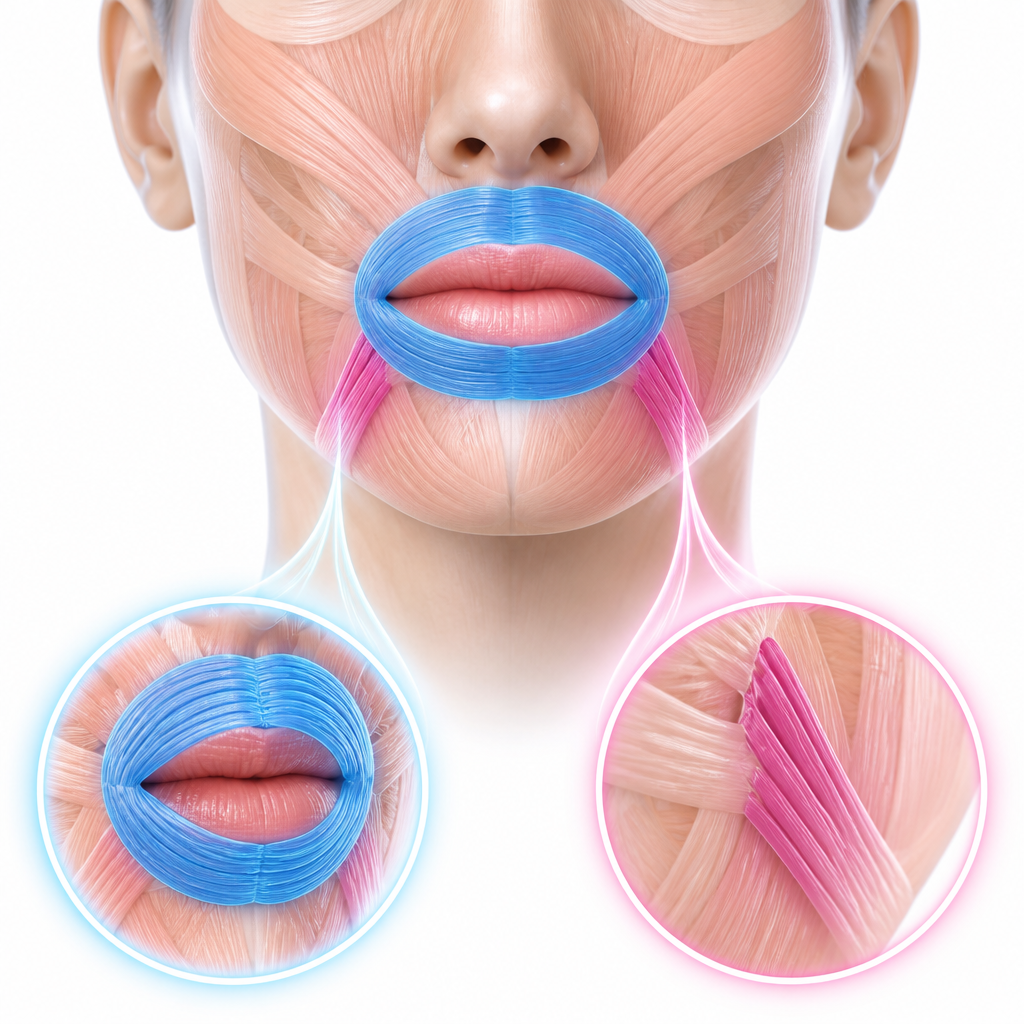
What are the anatomical differences and clinical outcomes of single versus combined procedures?
According to multiple observational studies and meta-analyses in aesthetic dermatology, combining volume restoration with neuromodulation or structural corner vectoring yields a significantly higher patient satisfaction rate (exceeding 88% at 6 months) compared to isolated lip volumizing (approx. 62%). This is because isolated filler placement increases the physical weight of the lateral lower lip, which may exacerbate the downward droop if the supporting lateral structures are compromised.
The primary anatomical objective of a simultaneous procedure is to re-establish the youthfulness of the “Ogee curve” of the lower face. When hyaluronic acid filler is precisely placed at the oral commissure—specifically targeting the modiolus, the fibromuscular junction where multiple facial muscles converge—it provides structural scaffolding. When this scaffolding is combined with a precise injection of botulinum toxin into the DAO, the downward-pulling force is temporarily inhibited, allowing the levator anguli oris and zygomaticus major muscles to pull the corners upward naturally. However, outcomes may differ in exceptional cases such as patients with severe skeletal malocclusion, profound senile elastosis, or active facial nerve palsy, where surgical intervention or orthodontic correction may be required.
| Treatment Approach | Primary Mechanism | Clinical Advantage | Inherent Limitation |
|---|---|---|---|
| Isolated Lip Filler | Volumization of the vermilion body via HA injection | Immediate correction of thin lip mucosa | Does not correct active downward muscle pulling; risk of artificial projection |
| Mouth Corner Botox Only | Chemodenervation of the Depressor Anguli Oris (DAO) | Natural elevation of mouth corners at rest | No improvement in static wrinkles or mucosal volume deficits |
| Simultaneous Combined Procedure | Volumetric scaffolding paired with dynamic vector modulation | Synergistic, balanced lift; longer-lasting clinical efficacy | Requires advanced injector expertise to prevent asymmetric smile patterns |
According to official consensus guidelines published in the Journal of Cosmetic Dermatology (2022), optimal perioral rejuvenation requires a multi-dimensional approach that respects the dynamic interplay between soft-tissue volume depletion and hyperfunctional muscle dynamics.
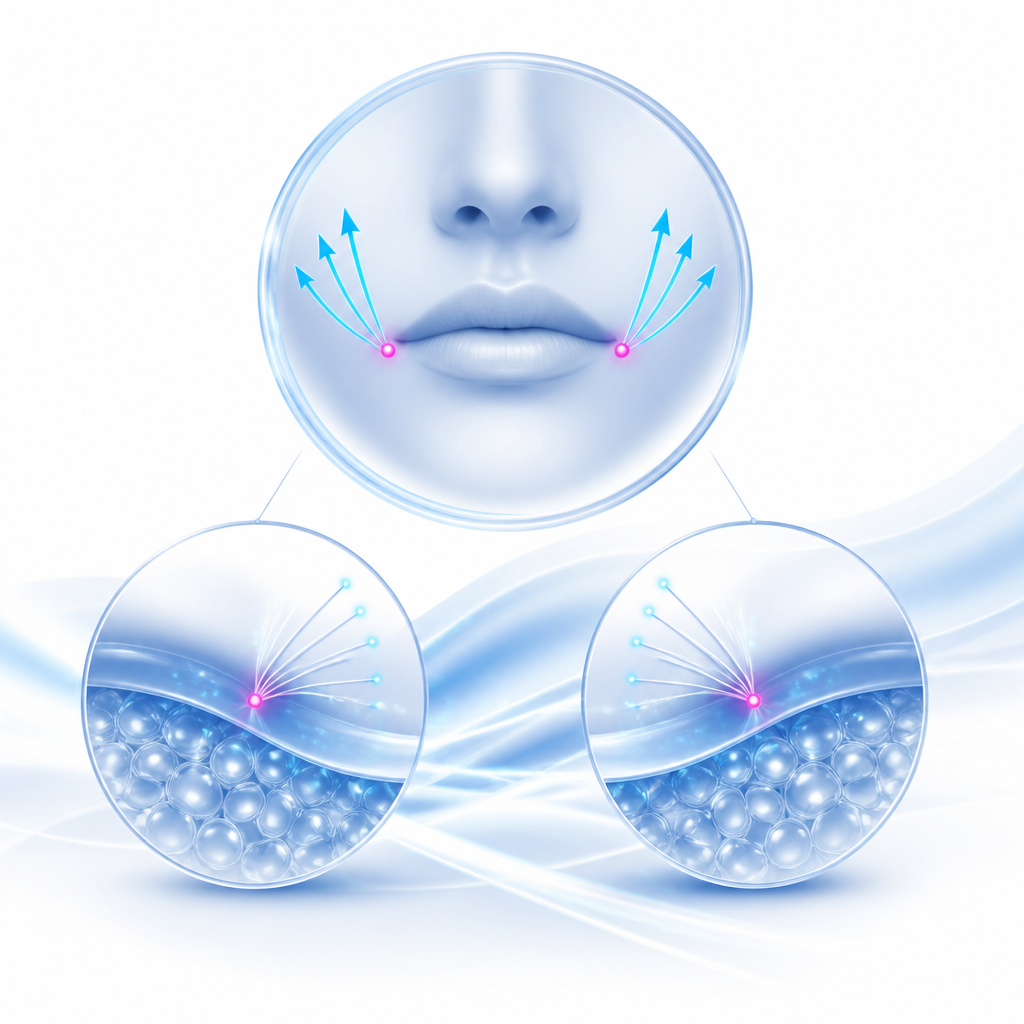
How do dermatologists assess candidacy and mitigate complications during combined therapy?
Safety is the absolute priority during any perioral procedure. The lips are highly vascularized, supplied by the superior and inferior labial arteries, which run deep to the orbicularis oris muscle but can exhibit significant anatomical variations. Accidental intravascular injection of hyaluronic acid filler can lead to acute vascular occlusion, tissue necrosis, or in rare instances, systemic embolization. Therefore, clinical guidelines dictate the use of blunt-tip microcannulas (typically 25G or 27G) when performing deeper lateral volumizing, coupled with slow, retrograde, low-pressure extrusion of the product.
Furthermore, assessing the patient\’s dynamic facial expressions is crucial prior to the procedure. Over-treating the DAO muscle or misplacing the botulinum toxin into the adjacent depressor labii inferioris (DLI) can result in transient but highly distressing functional impairments, such as an asymmetric smile, drooling, or difficulty pronouncing certain consonants. To minimize these risks, experienced dermatologists at Dermatology perform comprehensive pretreatment dynamic muscle mapping.
Clinical Safety and Patient Selection Checklist:
- Vascular Risk Screening: Confirm the absence of previous scarring or surgical alterations in the perioral area that might distort standard arterial pathways.
- Dynamic Muscle Grading: Assess the degree of DAO contraction during speech and forced depression to customize the neuromodulator dosage.
- Mucosal Elasticity Evaluation: Determine if the mucosal tissue can safely accommodate the planned volume without compromising capillary refill time.
- Coagulation Profile Review: Verify that the patient has discontinued non-essential antiplatelet or anticoagulant agents at least 5 to 7 days prior to treatment.
- Post-Procedure Protocol Compliance: Ensure the patient understands and can follow recovery guidelines, including avoiding strenuous perioral movement or thermal extremes.
To assist in the decision-making process, clinicians utilize a structured clinical pathway:
- Step 1 (Assessment): Differentiate whether the downward mouth corner is primary static (due to fat/bone resorption) or primary dynamic (due to hyperactive DAO).
- Step 2 (Planning): If dynamic forces dominate, plan combined HA filler (0.5cc–1.0cc) with low-dose DAO neuromodulation. If purely static, focus on lateral sub-commissural dermal support.
- Step 3 (Execution & Monitoring): Inject using a retrograde cannula technique, perform an immediate capillary refill test, and schedule a mandatory clinical follow-up at 14 days.
Frequently Asked Questions FAQ
QWhat is the expected recovery timeline, and are there immediate side effects?
Mild swelling, localized erythema, and occasional bruising are common and expected inflammatory responses that typically resolve within 3 to 7 days. Because the perioral tissues are highly vascular, minor edema can appear asymmetrical during the first 48 hours; however, this should stabilize as the hyaluronic acid integrates into the surrounding tissue. If localized pain increases or skin blanching is observed, contact your physician immediately.
QHow long do the clinical results of a combined lip and corner lift last?
On average, the volumetric results of high-cohesivity HA fillers in the lip body last between 6 to 12 months, depending on individual metabolic rates and dynamic movement. The dynamic lifting effect achieved through neuromodulation typically lasts 3 to 4 months. To maintain optimal aesthetic synergy, a maintenance program involving micro-dosing of the dynamic vectors every 4 months is clinically recommended.
QCan this procedure correct severe, long-standing drooping of the mouth corners?
While simultaneous non-surgical rejuvenation provides excellent corrective outcomes for mild-to-moderate senile or genetic drooping, severe structural descent accompanied by significant skin laxity may have physiological limitations. In cases of advanced elastosis, combining non-surgical injections with energy-based skin tightening devices (such as microfocused ultrasound) or discussing surgical mouth corner resection may be necessary to meet patient expectations.
This content is general medical information, and individual treatment decisions should be made through imaging tests and in-person medical evaluation.
Author: Medical content editor based on medical information research
Reviewed by: Specialist consultation from the relevant department
Last reviewed: 2026-06-18
Reference guideline: 2022 International Consensus Guidelines for Perioral Rejuvenation and Dynamic Myomodulation
Medical neutrality and closing note
The core of medical decision-making is not to follow a specific device or a trending procedure, but to choose an option that fits each patient’s individual anatomy, condition, risk level, and treatment goals. Every procedure has both advantages and limitations, so decisions should be made after sufficient discussion with an experienced specialist.
[Medical information and copyright notice]
This content is a professional medical column prepared based on medical consultation from 청담큐비큐의원.
The infographics used in this article are created to support understanding and may differ from actual clinical results.
The information provided is a general medical guideline, and accurate diagnosis and treatment require an in-person evaluation by a qualified specialist.