Is Your Skin Actually Generating New Collagen? The Scientific Standards for Thermage RF Lifting and Long-Term Dermal Remodeling
Why Does Progressive Collagen Depletion Require Non-Invasive Dermal Remodeling?
Skin aging is pathophysiologically characterized by progressive dermal atrophy, primarily driven by a continuous 1% annual decline in Type I and Type III collagen synthesis starting in early adulthood. This physiological decline is accelerated by environmental factors such as ultraviolet radiation (photoaging) and intrinsic cellular senescence. As the extracellular matrix (ECM) degrades, the structural integrity of the dermis collapses, leading to clinical manifestations of laxity, fine lines, and compromised viscoelasticity. To reverse this structural degradation without surgical intervention, energy-based therapeutic standards must penetrate beyond the epidermis to trigger a controlled wound-healing response deep within the skin tissue.
Treatment timing: Clinical intervention is ideal when early physiological signs of dermal thinning or superficial laxity emerge, typically before deep structural sagging compromises the retaining ligaments.
Non-surgical care: Conservative management utilizing topical retinoids, medical-grade photoprotection, and oral bioactive peptides is highly reasonable for maintaining epidermal health, but cannot replace energy-based deep tissue tightening once moderate ECM degradation occurs.
Treatment selection: Selecting the optimal intervention depends on assessing localized dermal thickness, subcutaneous fat distribution, and patient tolerance to thermal stimulation to prevent adverse structural changes.
How Does Monopolar Radiofrequency Stimulate Neocollagenesis in the Dermis?
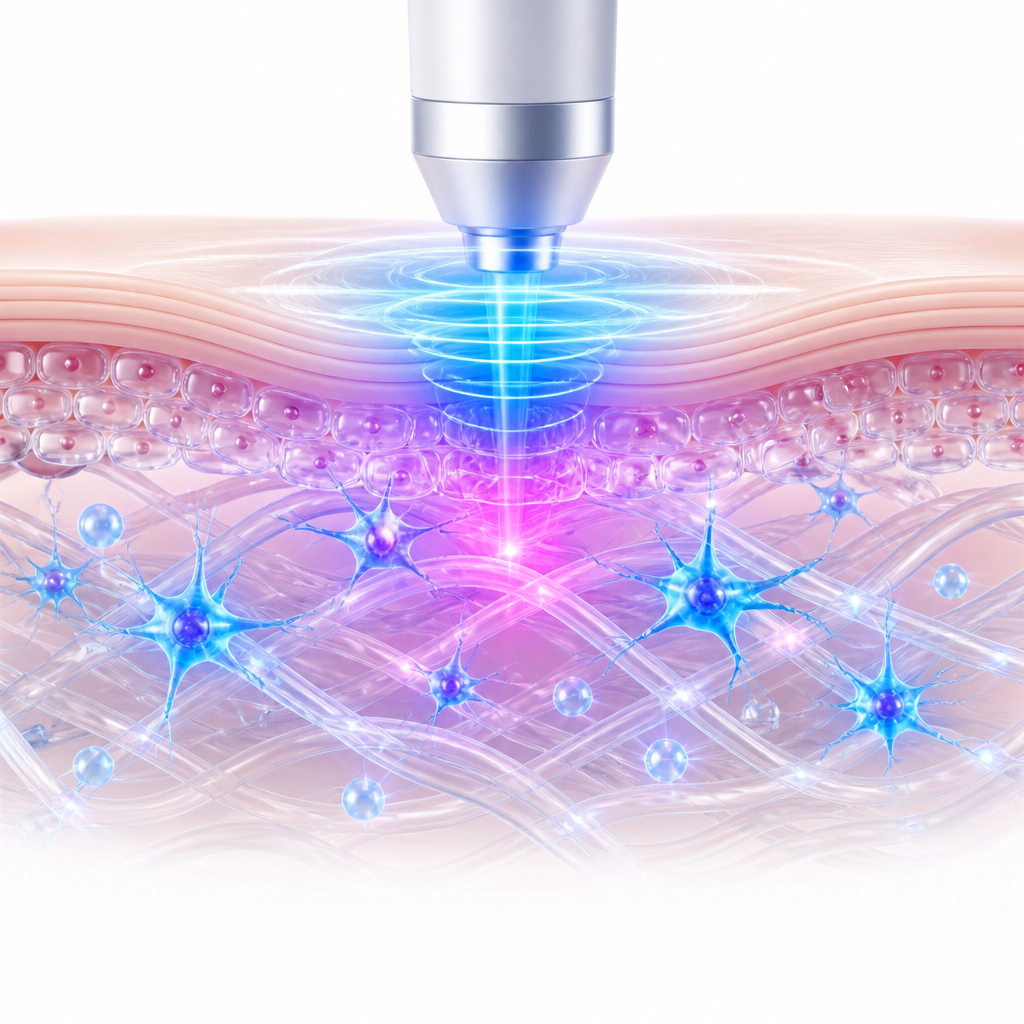
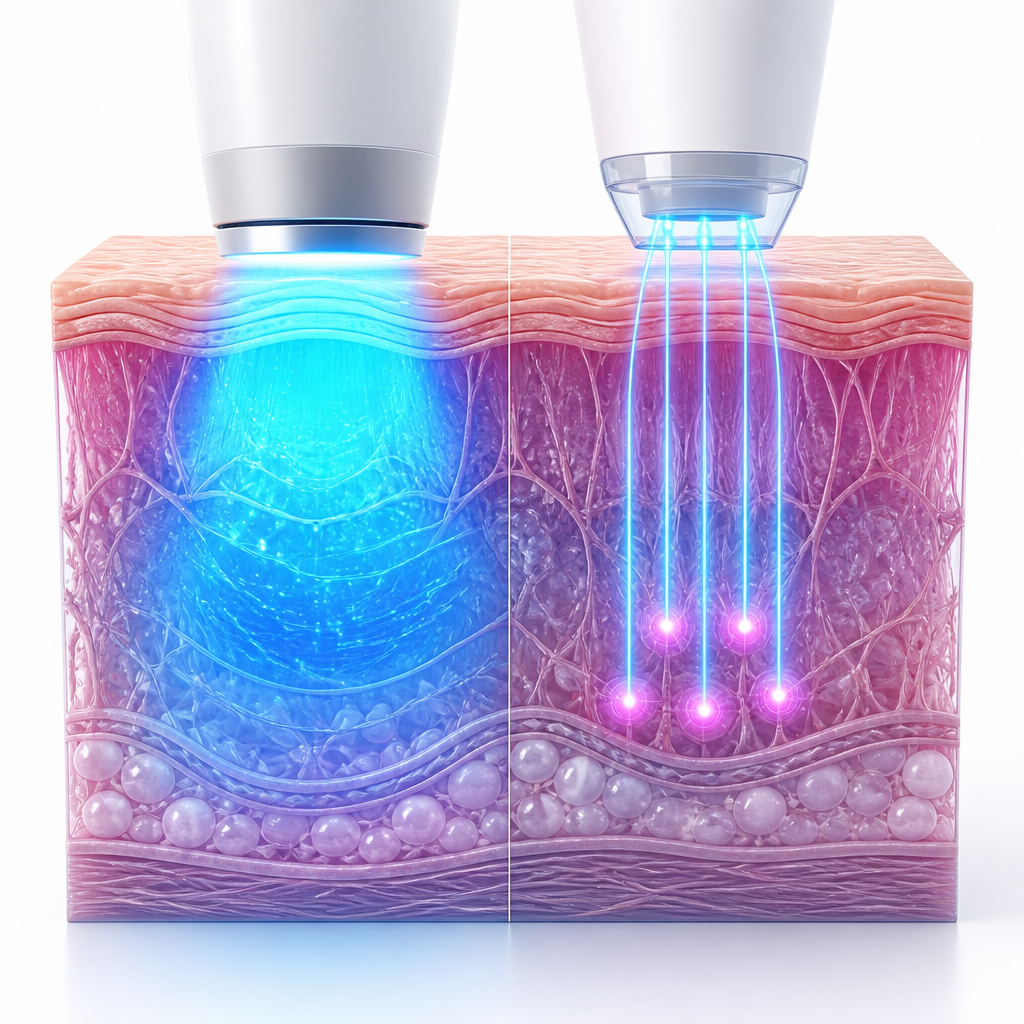
The core mechanism of monopolar radiofrequency (RF) lifting, clinically epitomized by Thermage, lies in its capacity to deliver uniform volumetric heating to the deep reticular dermis while preserving the epidermis. Unlike bipolar RF, which is limited by shallow energy penetration between two closely spaced electrodes, monopolar RF utilizes a single active electrode tip paired with a grounding pad. This configuration forces the electrical current to pass through the entire volume of the skin and subcutaneous tissue. According to multiple observational studies and meta-analyses, when the temperature of the reticular dermis is sustained between 55°C and 65°C, the hydrogen bonds stabilizing the collagen triple-helix structure are disrupted, leading to immediate thermal contraction of the collagen fibers. This acute biological stress activates a secondary wound-healing cascade, stimulating dermal fibroblasts to synthesize new Type I and Type III collagen over the subsequent 2 to 6 months.
While conservative strategies such as medical-grade skincare, chemical peels, or micro-needling provide superficial rejuvenation, they lack the physical capability to heat the deeper target zones. Therefore, for patients presenting with moderate dermal laxity, energy-based technologies represent the standard for achieving clinically measurable dermal thickening. However, proper patient selection is paramount to balance clinical efficacy with safety profiles.
| Modality | Primary Target Depth | Key Advantage | Clinical Limitation |
|---|---|---|---|
| Monopolar RF (Thermage) | Reticular Dermis & Subcutaneous Fibrous Septae | Uniform volumetric heating, excellent for skin tightening and superficial refinement. | Requires precise execution to avoid localized fat atrophy; high operator dependency. |
| Micro-focused Ultrasound (HIFU) | SMAS Layer & Deep Subcutaneous Tissue | Highly focal energy delivery, ideal for targeting deep structural laxity and fat reduction. | May cause focal hollows in thin skin; does not provide uniform dermal remodeling. |
| Bipolar / Fractional RF | Epidermis & Papillary Dermis | Highly effective for skin texture, scarring, and superficial pore reduction. | Limited penetration depth, requiring multiple sessions for noticeable lifting. |
According to official guidelines from international dermatological societies, selecting between monopolar radiofrequency and focused ultrasound should not be treated as a binary choice, but rather as a complementary approach tailored to the patient\’s individual subcutaneous fat volume and localized tissue laxity.
What Are the Clinical Indicators for Selecting Thermage Treatment Timing?
To optimize the success rate of non-surgical lifting, clinicians evaluate several quantitative and qualitative indicators. Neocollagenesis is highly dependent on the metabolic capacity of the patient\’s fibroblasts. According to a landmark study published in the Journal of Clinical and Aesthetic Dermatology (2018), patients aged 30 to 55 with mild-to-moderate skin laxity demonstrate the highest rate of post-treatment collagen synthesis. In these individuals, the dermal fibroblast population is sufficiently viable to respond robustly to the thermal injury zones created by the RF energy.
However, outcomes may differ in exceptional cases such as patients with severe connective tissue disorders, advanced age-related dermal thinning where fibroblast populations are critically depleted, or individuals with active, uncontrolled systemic inflammatory conditions that impair normal wound healing pathways. For these individuals, a combination of bio-stimulatory injectables and conservative energy levels may be indicated to avoid adverse events.
Patient Assessment and Decision Checklist
- Evaluation of Subcutaneous Volume: Check for thin skin with pre-existing fat deficits to prevent undesirable post-treatment hollowing.
- Degree of Dermal Laxity: Determine if the laxity is limited to the superficial skin layers (ideal for RF) or involves deep SMAS sagging (which may require combined modalities).
- Fibroblast Vitality Factors: Assess nutritional status, smoking status, and UV exposure history, which directly affect the rate of new collagen synthesis.
- Previous Aesthetic Interventions: Confirm the timeline of temporary fillers or thread lifts to prevent thermal degradation of active materials.
- Post-Procedure Recovery Commitment: Verify the patient\’s willingness to follow crucial sun protection and barrier-repair protocols post-treatment.
If-Then Decision Flow for Clinical Treatment
- If the patient exhibits structural skin laxity with sufficient subcutaneous fat, then a high-density monopolar RF treatment is indicated to tighten the fibrous septae and stimulate overall dermal thickening.
- If the patient presents with severe superficial volume depletion in the temple or cheek area, then volume restoration using autologous dermal stimulators must be planned either prior to or in combination with low-energy RF settings.
- If there is active epidermal inflammation or a compromised skin barrier, then energy-based procedures must be postponed until complete barrier repair and cellular stabilization are achieved.
Frequently Asked Questions FAQ
QHow long does it take to see visible results after a Thermage treatment?
While some patients experience mild, immediate tightening due to acute thermal collagen fiber contraction, the true biological results of neocollagenesis emerge progressively. The primary dermal remodeling phase peaks between 3 and 6 months post-treatment, during which newly synthesized Type I and Type III collagen fibers mature, leading to improved skin elasticity and structural density.
QCan Thermage cause subcutaneous fat loss or facial hollowing?
Subcutaneous fat atrophy is a rare but documented risk that typically occurs when excessive energy is repeatedly delivered to areas with very thin skin, or when old-generation systems without real-time impedance monitoring are utilized. Modern clinical protocols at 청담큐비큐의원 emphasize real-time energy adjustments and customized mapping to target only the rich dermal layers and fibrous septae, preventing unintended thermal injury to fat cells.
QWhat is the recommended frequency for maintaining collagen stimulation?
Because the skin continues its natural physiological aging process and collagen depletion continues at a rate of approximately 1% per year, a single maintenance session every 12 to 18 months is generally recommended to sustain dermal density. However, the precise interval should be personalized based on individual rates of aging and lifestyle factors.
QIs the procedure safe for all skin types, including darker skin tones?
Unlike optical energy-based devices (such as lasers) which target melanin and carry a high risk of post-inflammatory hyperpigmentation (PIH) in darker skin types, radiofrequency energy is color-blind. Because the energy is delivered based on electrical impedance rather than chromophore absorption, it is safe for all Fitzpatrick skin types when performed under correct cooling protocols.
This content is general medical information, and individual treatment decisions should be made through imaging tests and in-person medical evaluation.
Author: Medical content editor based on medical information research
Reviewed by: Specialist consultation from the relevant department
Last reviewed: 2026-06-23
Reference guideline: 2023 Consensus Guidelines for Monopolar Radiofrequency in Aesthetic Dermatology
Medical neutrality and closing note
The core of medical decision-making is not to follow a specific device or a trending procedure, but to choose an option that fits each patient’s individual anatomy, condition, risk level, and treatment goals. Every procedure has both advantages and limitations, so decisions should be made after sufficient discussion with an experienced specialist.
[Medical information and copyright notice]
This content is a professional medical column prepared based on medical consultation from 청담큐비큐의원.
The infographics used in this article are created to support understanding and may differ from actual clinical results.
The information provided is a general medical guideline, and accurate diagnosis and treatment require an in-person evaluation by a qualified specialist.